What Is Hydraulic Pilot Control?
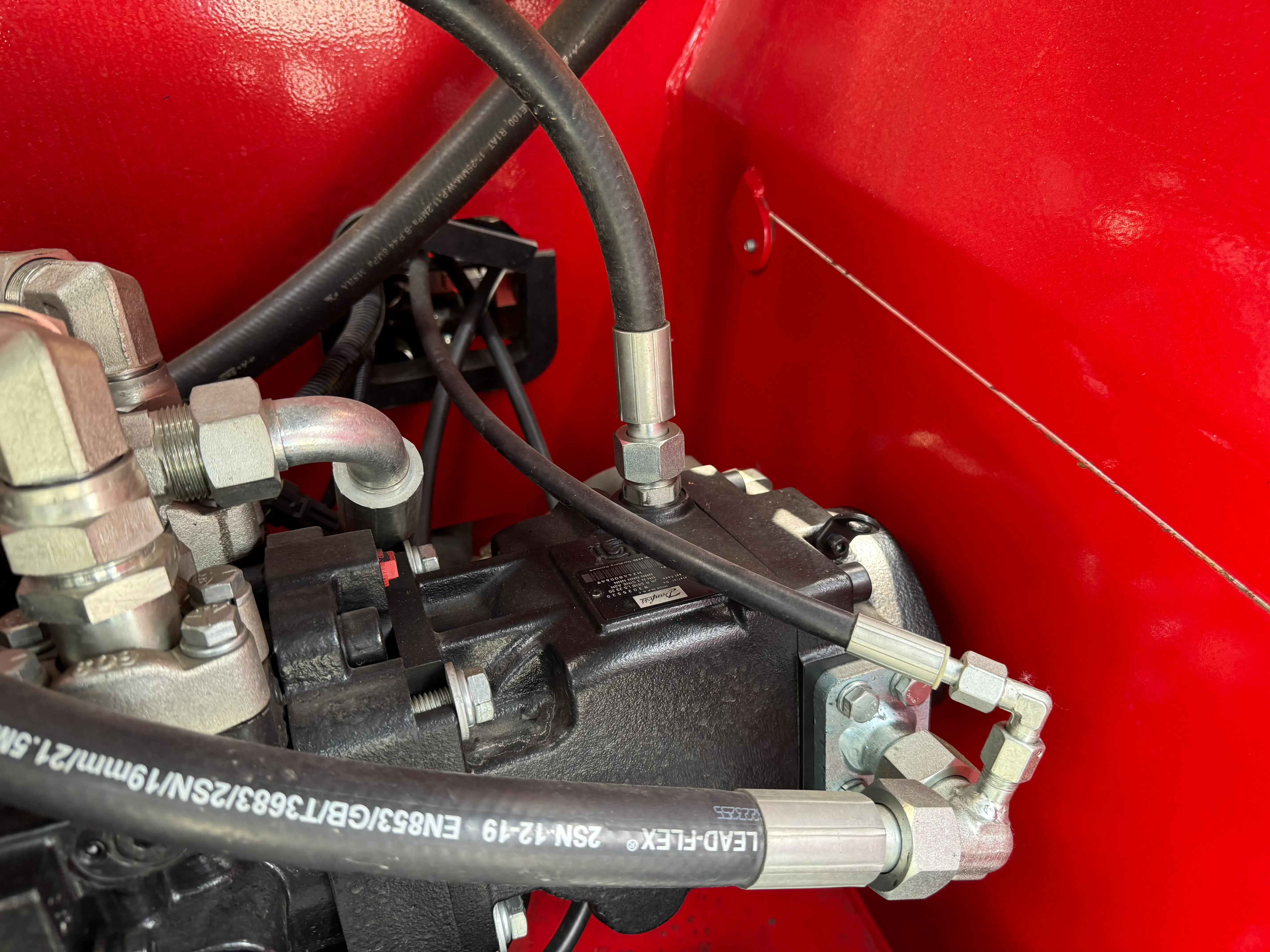
Hydraulic pilot control uses a low-pressure control circuit to send the operator’s joystick commands to the machine’s main hydraulic control system.
The operator does not directly move the main valve through long mechanical levers. Instead, relatively small joystick movements control the hydraulic functions of the working equipment.
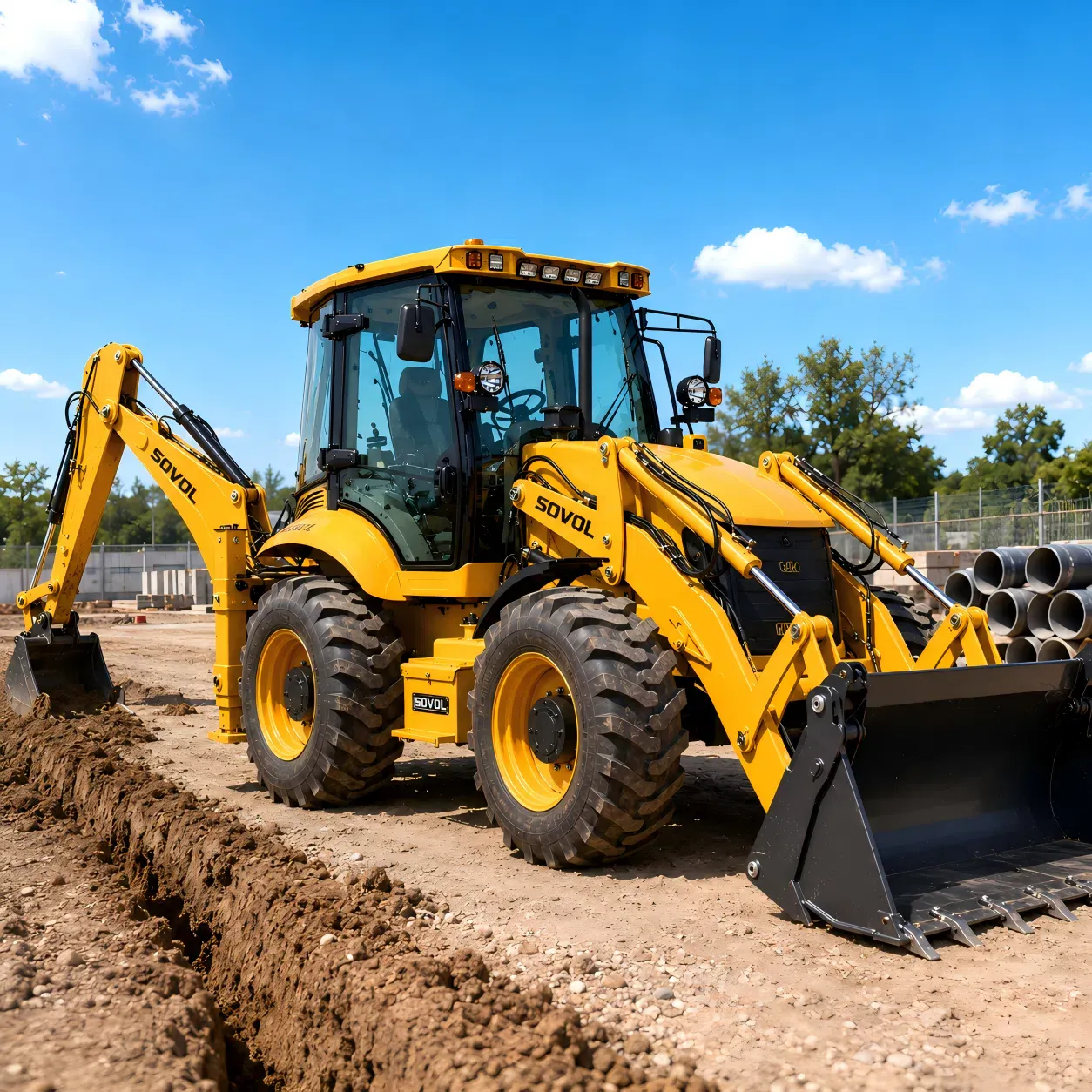
On a backhoe loader, pilot operation can be used to control functions such as:
· Boom movement
· Dipper or stick movement
· Bucket opening and closing
· Rear excavator swing
· Front-loader lifting
· Front-bucket tilting
· Selected auxiliary hydraulic functions
Benefits of Hydraulic Pilot Controls
Lower Operating Effort
Backhoe loader operators may complete hundreds of control movements during a normal working shift.
Pilot joysticks generally require less physical effort than long mechanical levers. This can help reduce repeated arm and shoulder movement.
Smoother Hydraulic Response
Pilot controls allow the operator to regulate working movements through smaller joystick input
Better Control During Precision Work
Operators may need to work around pipes, walls, drainage components, foundations or existing infrastructure.
Hydraulic pilot operation can help the operator manage gradual movements
Improved Operator Comfort
The compact joystick arrangement can create a more convenient operating position than traditional long control levers.
Featured Models
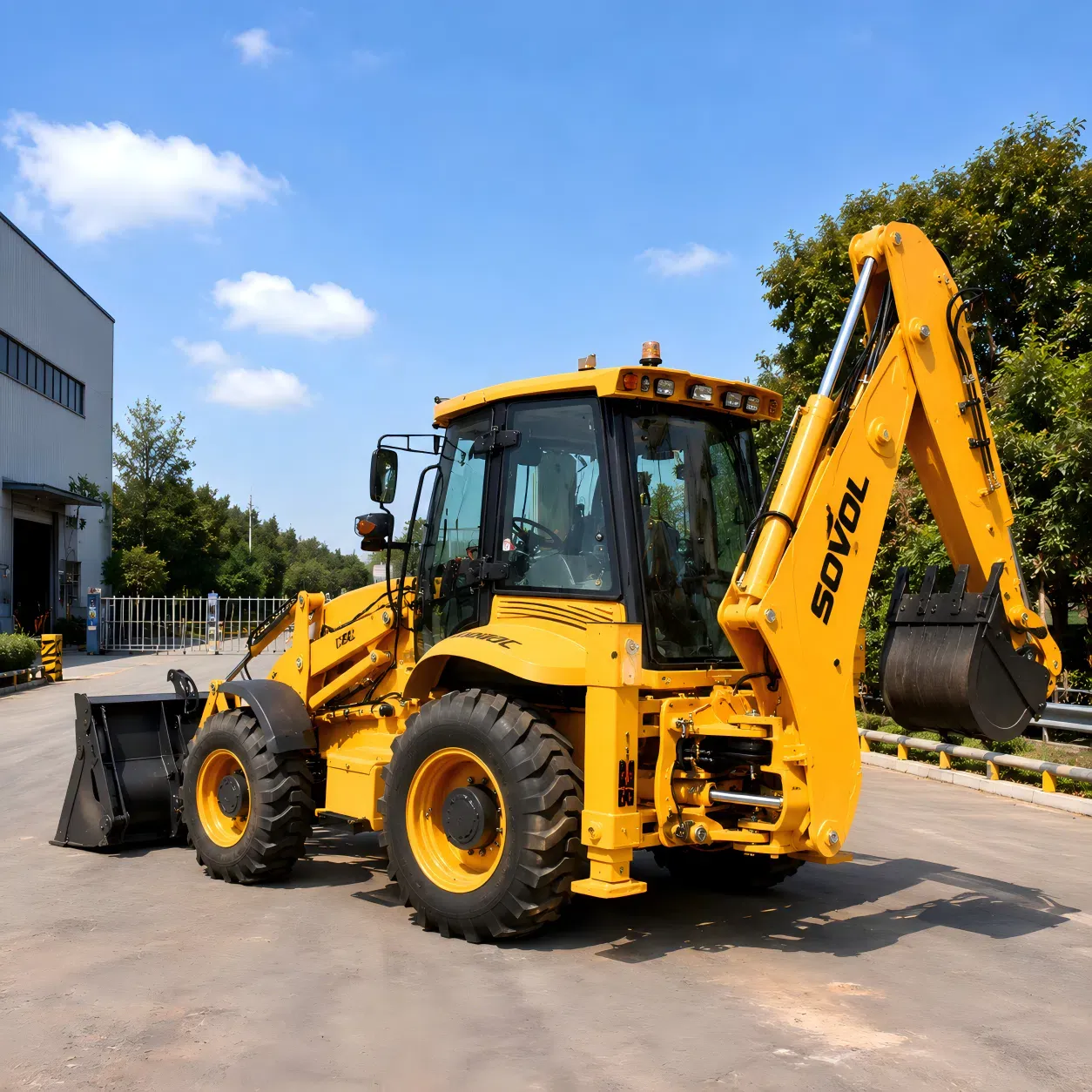
The SOVOL SW388 has an operating weight of 8,200 kg and combines a 1.2 m³ front loader bucket with a 0.3 m³ rear excavator bucket.
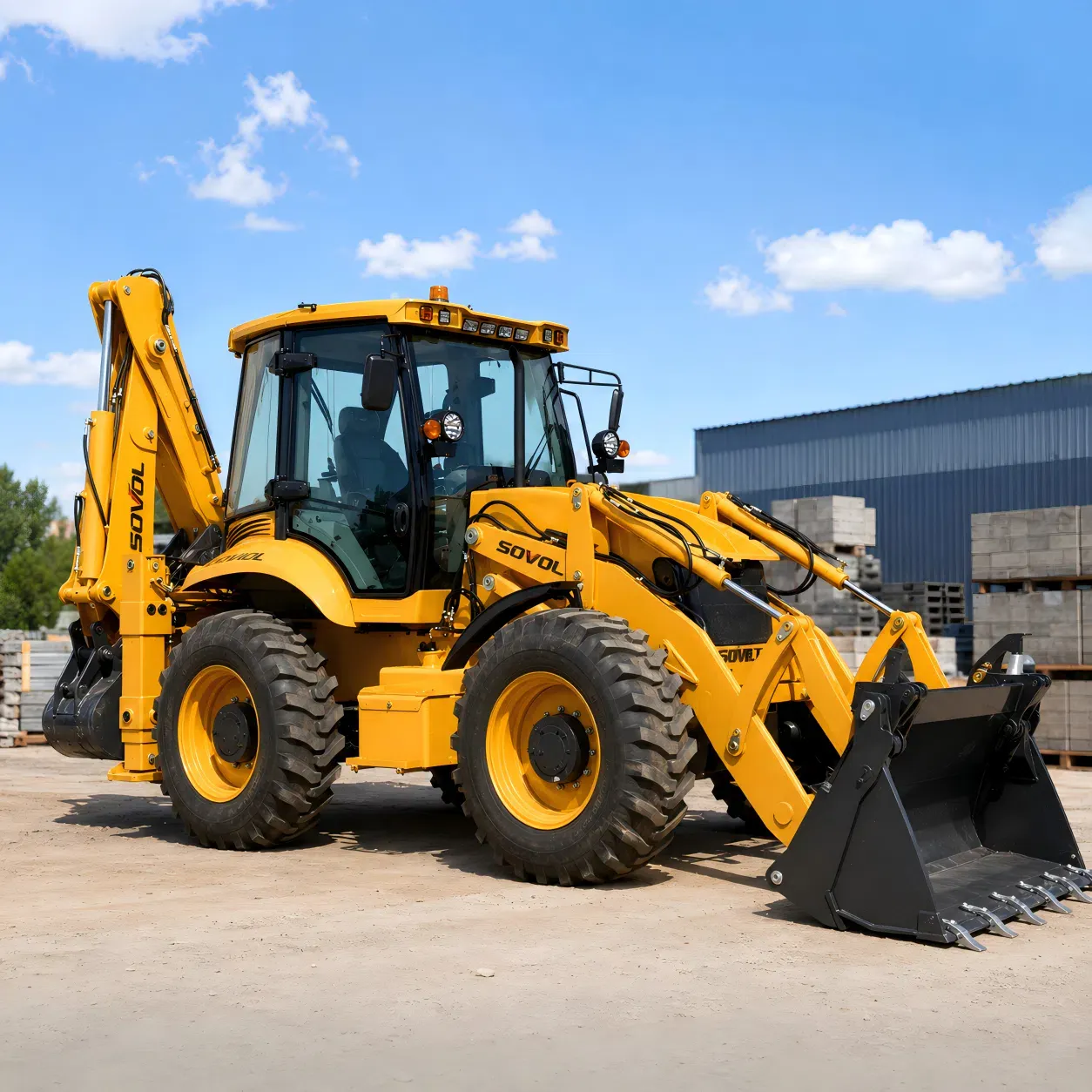
The SOVOL SW388T has an operating weight of approximately 11,000 kg and uses a heavy-duty wet axle with larger 16.9-28 tires.
SW388 vs SW388T Pilot-Control Models
| Selection Factor | SW388 | SW388T |
| Operating weight | 8,200 kg | Approximately 11,000 kg |
| Control type | Hydraulic pilot | Hydraulic pilot |
| Axle | Heavy-duty dry axle | Heavy-duty wet axle |
| Tire size | 14-17.5 / 19.5L24 | 16.9-28 |
| Front / rear bucket | 1.2 m³ / 0.3 m³ | 1.2 m³ / 0.3 m³ |
| Main advantage | Maneuverability and general versatility | Stability and heavier-duty configuration |
| Recommended users | Farms, landscaping, general contractors and municipalities | Infrastructure, heavier contractors and demanding rental fleets |
Hydraulic Pilot vs Mechanical Controls
Mechanical controls use physical rods, linkages or cables to operate the hydraulic valve.
They may offer:
· Simple construction
· Direct mechanical feedback
· Familiarity for some operators
· Fewer pilot-control components
Hydraulic pilot controls may offer:
· Lower lever effort
· More compact joysticks
· Smoother control inputs
· Improved operator ergonomics
· Easier coordination of multiple functions
Neither system automatically guarantees higher productivity. Machine condition, hydraulic tuning, operator experience and job-site management also affect performance.
FAQ
Q1:Are hydraulic pilot controls easier to operate?
They generally require less physical force than traditional long mechanical levers. Operators still need training and experience to use the machine safely and efficiently.
Q2:Are pilot controls more precise?
They can support gradual and proportional hydraulic movements. Actual control accuracy also depends on hydraulic adjustment, maintenance and operator skill.
Q3:Which model is better for general contractors?
The SW388 is suitable for general construction, farms, landscaping, municipal work and distributed projects.
Q4: Which model is better for demanding work?
The heavier SW388T is better suited to tougher ground, infrastructure work and customers requiring a wet axle and larger tires.