Product Introduction
One Machine from Excavation to Backfilling
A trenching project usually includes several connected operations:
· Preparing access to the digging area
· Removing surface material
· Excavating the trench
· Relocating excavated soil
· Loading unsuitable material
· Delivering sand, gravel or bedding material
· Backfilling after installation or inspection
· Grading and cleaning the work area
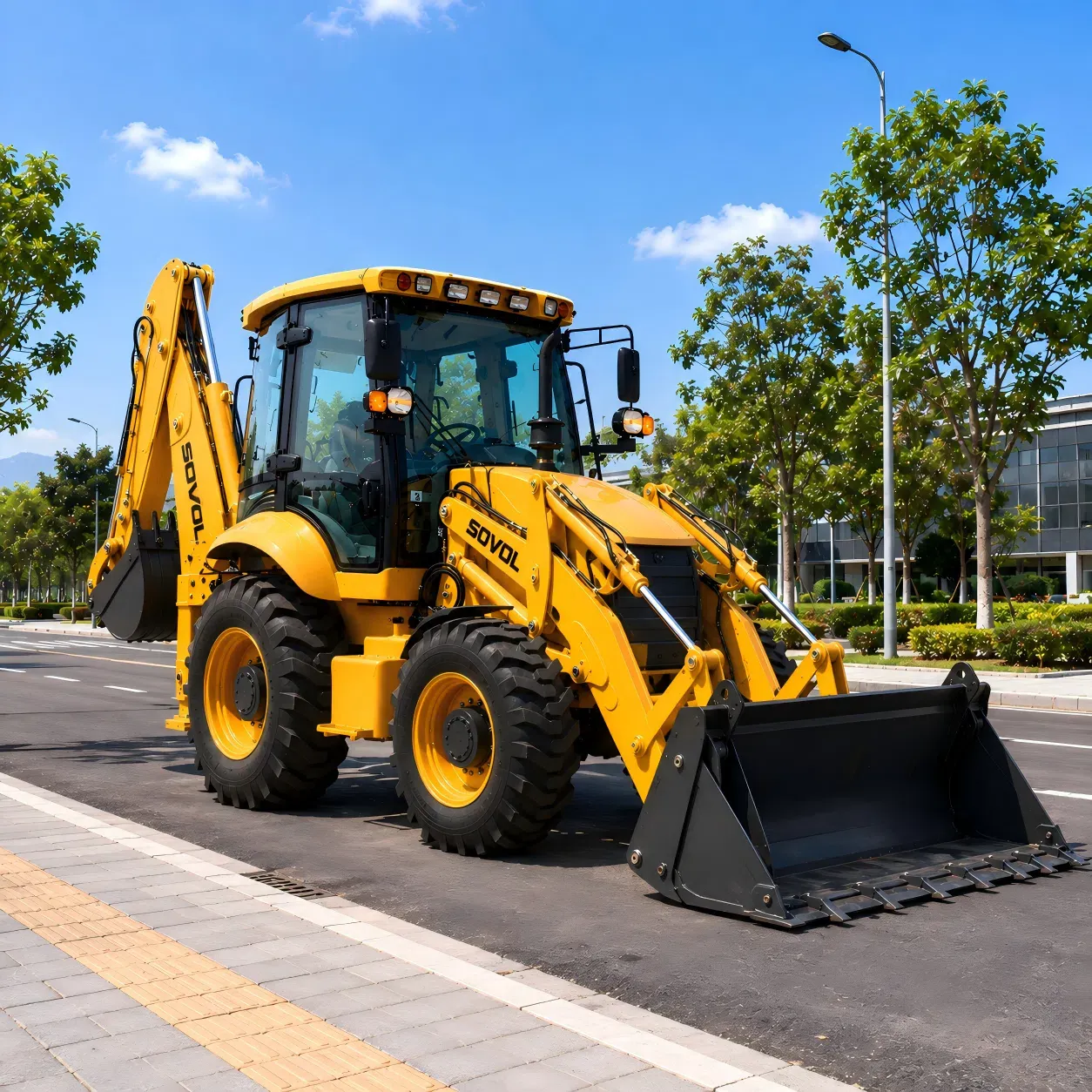
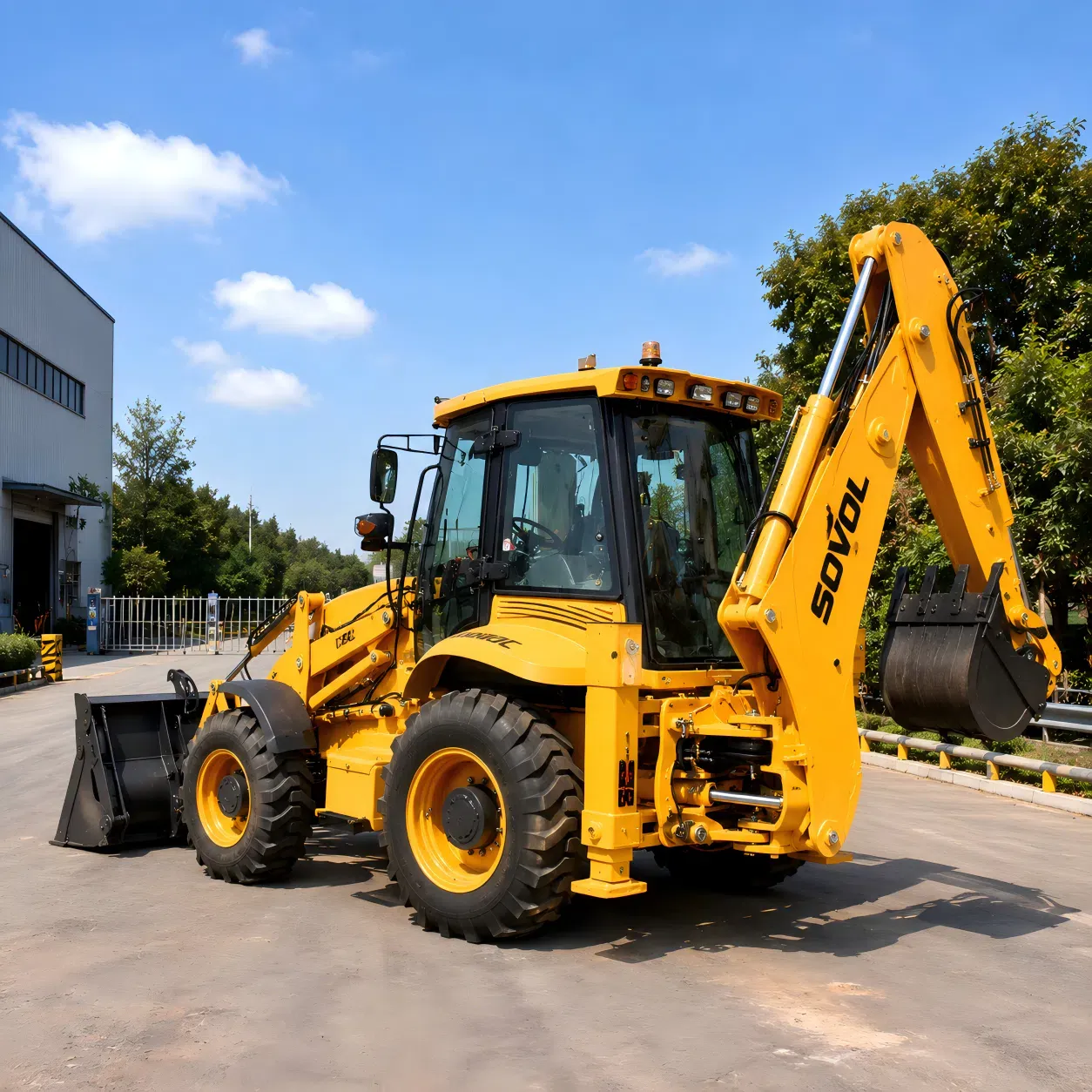
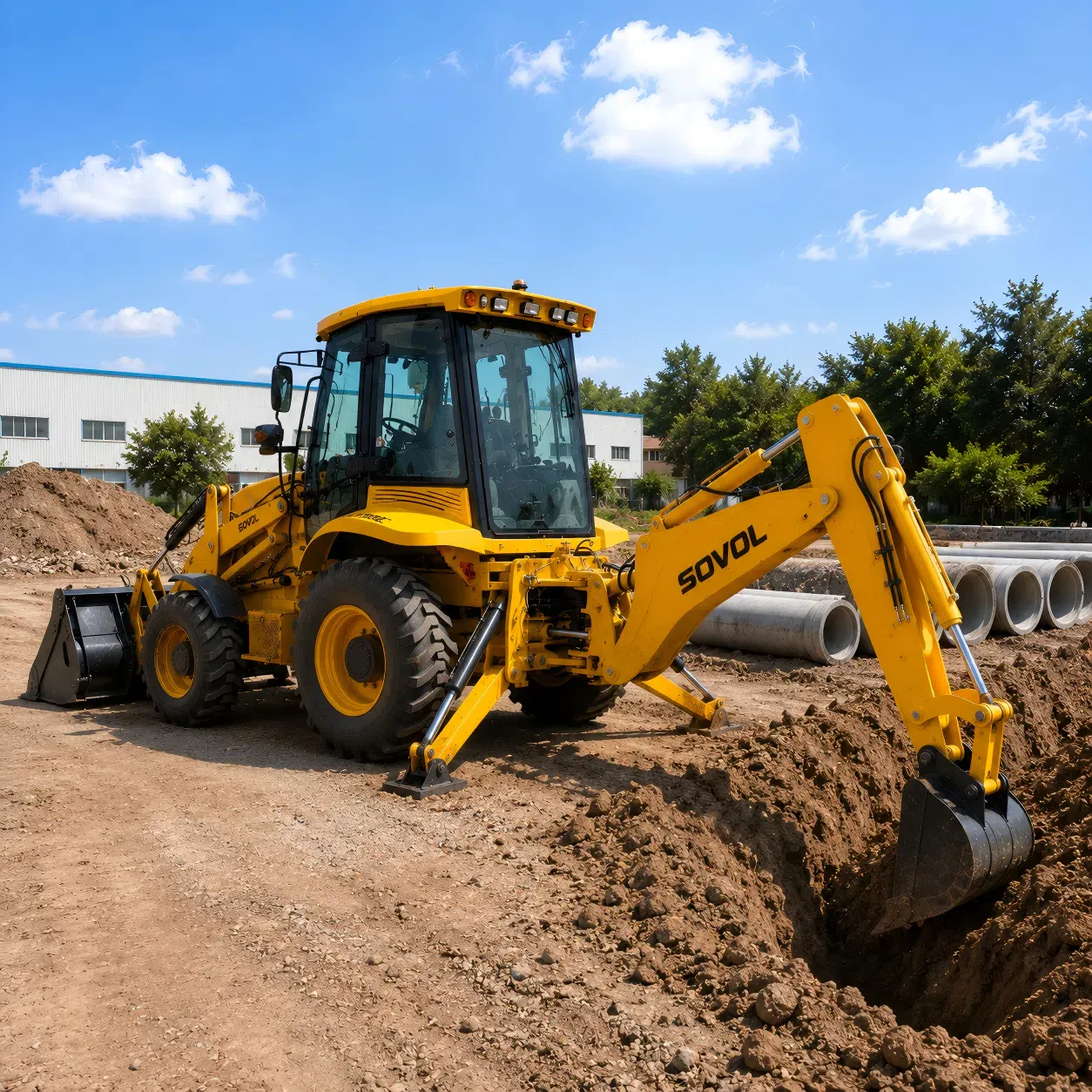
The rear digging arm completes the excavation, while the front loader handles materials before and after digging.
Trenching Applications
Utility Trenches
Backhoe loaders can excavate trenches for underground services
Drainage Ditches
A backhoe loader can dig and maintain drainage routes
Foundation Trenches
Small buildings, walls, fences and landscape structures may require trenches for footings or foundations.
Irrigation and Agricultural Trenching
Farms frequently require trenches for: Irrigation pipes, Livestock water systems, Field drainage, Electrical services, Greenhouse utilities, Rural property improvements
Roadside Trenching
Road projects may require trenches for drainage, lighting, communication lines and roadside utilities.
Repair Pits and Local Excavation
Not every excavation project requires a long continuous trench.
Trenching in Different Ground Conditions
Loose Soil and Topsoil
Loose soil is generally easier to excavate but may collapse into the trench if the sides are unstable.
Operators should follow the project’s trench-support and excavation-safety requirements, especially when personnel must enter or work near the trench.
Clay and Compacted Ground
Clay and compacted soil may require greater digging force and slower excavation cycles.
A suitable digging bucket and correct machine positioning can improve productivity and reduce unnecessary stress on the equipment.
Gravel and Mixed Ground
Gravel or mixed soil can be unstable and may contain larger stones.
The operator may need to excavate in smaller sections and keep loose material away from the trench edge.
Hard Ground and Pavement
When the trench route crosses compacted surfaces, asphalt or concrete, additional attachments may be required.
Wet or Soft Ground
Wet ground can reduce machine stability and make trench edges more likely to collapse.
SOVOL Backhoe Loaders for Trenching
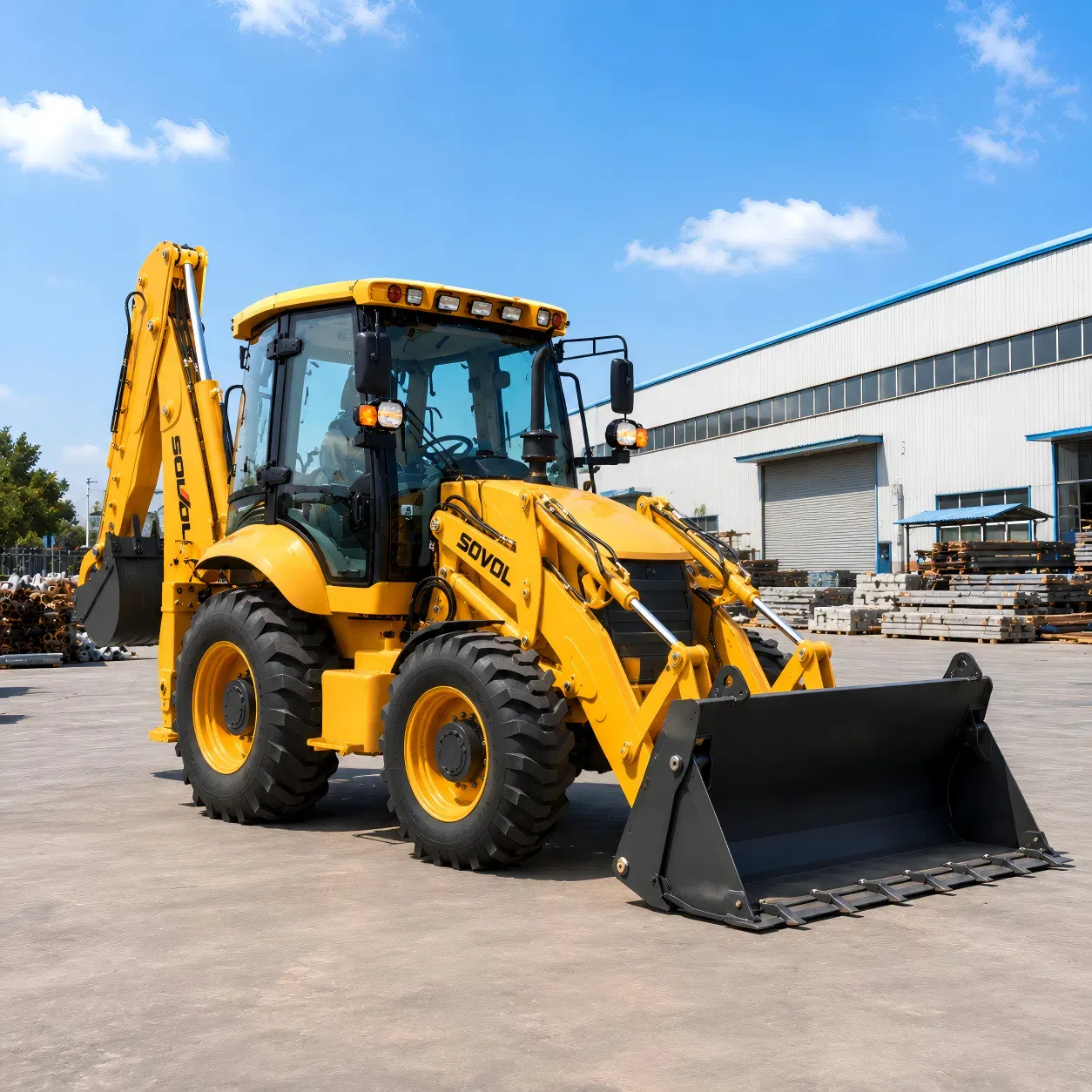
The SOVOL SW388 has an operating weight of 8,200 kg and combines a 1.2 m³ front loader bucket with a 0.3 m³ rear excavator bucket.
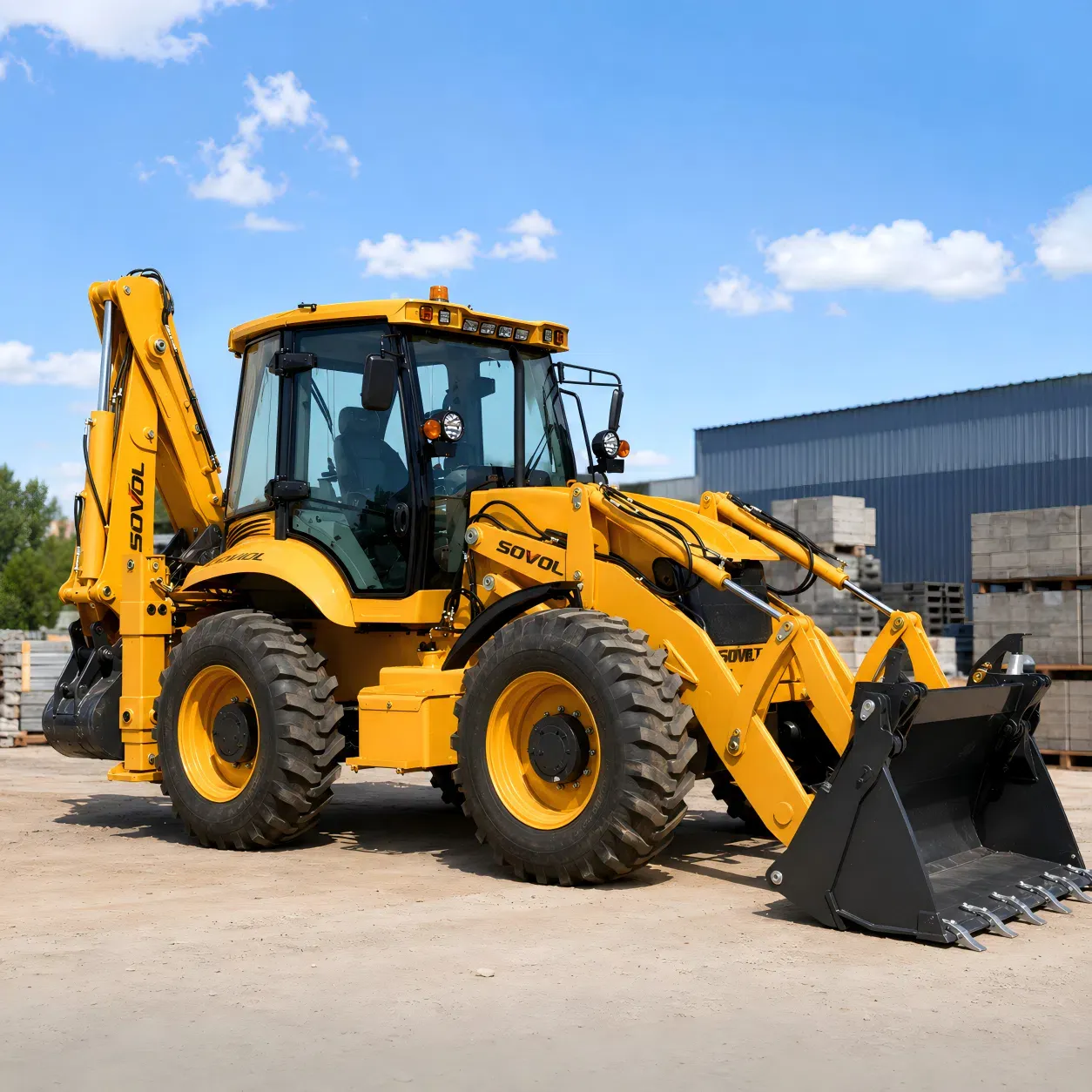
The SOVOL SW388T has an operating weight of approximately 11,000 kg and uses a heavy-duty wet axle with larger 16.9-28 tires.
SW388 or SW388T for Trenching?
| Selection Factor | SW388 | SW388T |
| Operating weight | 8,200 kg | Approximately 11,000 kg |
| Axle configuration | Heavy-duty dry axle | Heavy-duty wet axle |
| Tire size | 14-17.5 / 19.5L24 | 16.9-28 |
| Front / rear bucket | 1.2 m³ / 0.3 m³ | 1.2 m³ / 0.3 m³ |
| Main advantage | Maneuverability and versatility | Stability and heavier-duty construction |
| Recommended work | General, farm, municipal and distributed trenching | Repeated, demanding and infrastructure trenching |
FAQ
Q1: Can different trenching bucket widths be supplied?
Yes. Bucket width can be selected according to the trench dimensions, pipe size, soil conditions and project requirements.
Q2: Can the machine dig through pavement?
A hydraulic hammer can break certain concrete, pavement and compacted surfaces. Dedicated cutting equipment may still be required to create clean edges.
Q3: Is a backhoe loader better than a dedicated trencher?
A dedicated trencher may be faster for long, consistent trenches. A backhoe loader is more versatile when excavation, loading, backfilling and site restoration are all required.