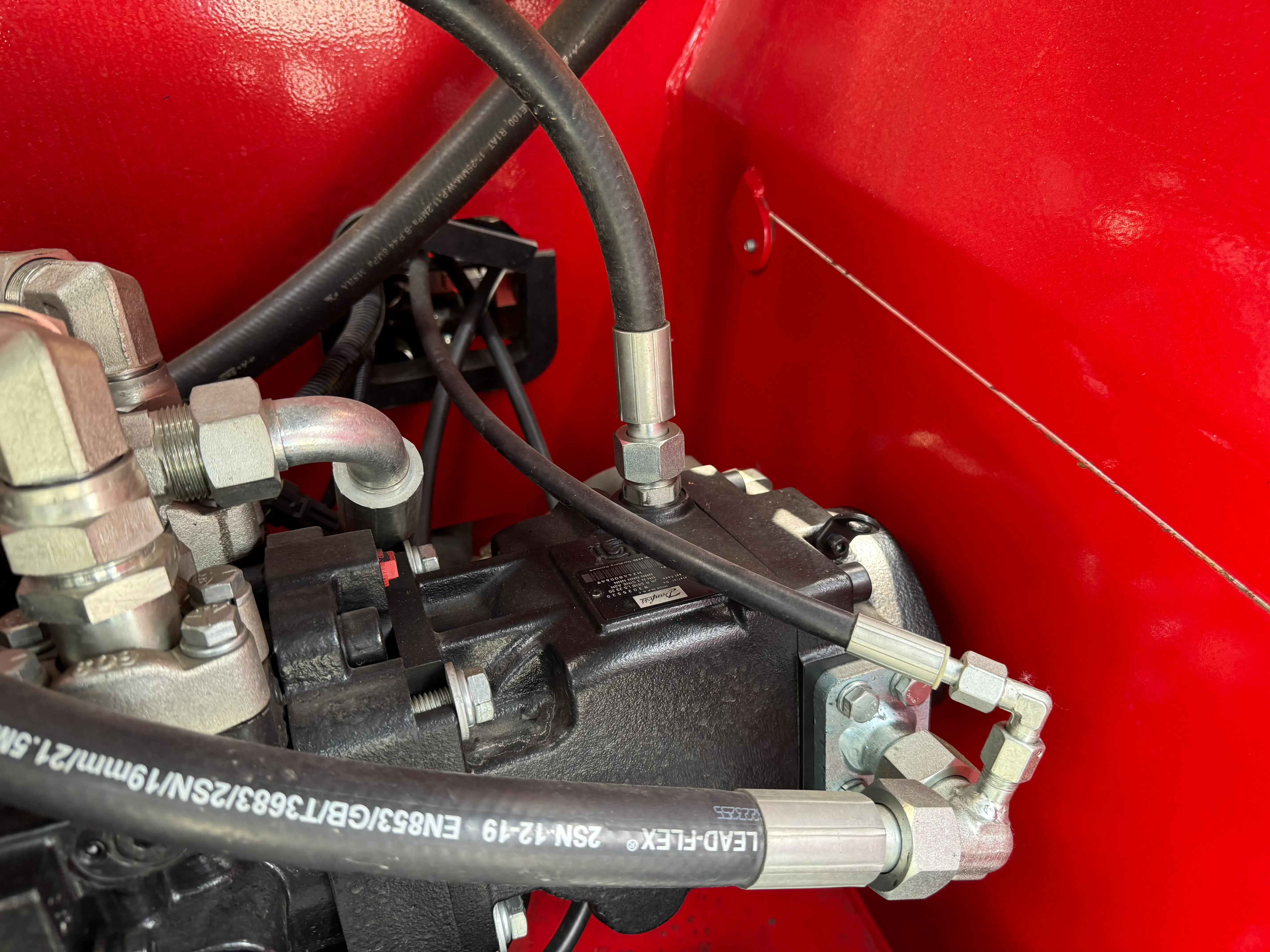
How Does a Hydrostatic Drive System Work?
A hydrostatic transmission uses hydraulic power to transfer energy from the engine to the drive system.
Instead of relying on conventional stepped gear changes, a hydrostatic system uses a hydraulic pump and motor to regulate travel speed and driving torque.
This allows operators to adjust machine movement smoothly within the system's operating range.
Key Benefits of the Danfoss Hydrostatic System
Smooth Travel Control
Hydrostatic drive enables gradual speed adjustment, helping operators maneuver more smoothly during short-distance travel and repeated positioning.
Precise Low-Speed Maneuvering
When approaching a pallet or positioning a load, controlled low-speed movement helps the operator make smaller adjustments without frequent gear changes.
Convenient Direction Changes
Depending on the machine's control configuration, hydrostatic transmission can simplify forward and reverse operation during repetitive material-handling cycles.
Flexible Operation Across Different Tasks
From agricultural yards to construction material storage areas, the system supports applications involving frequent starting, stopping and repositioning.
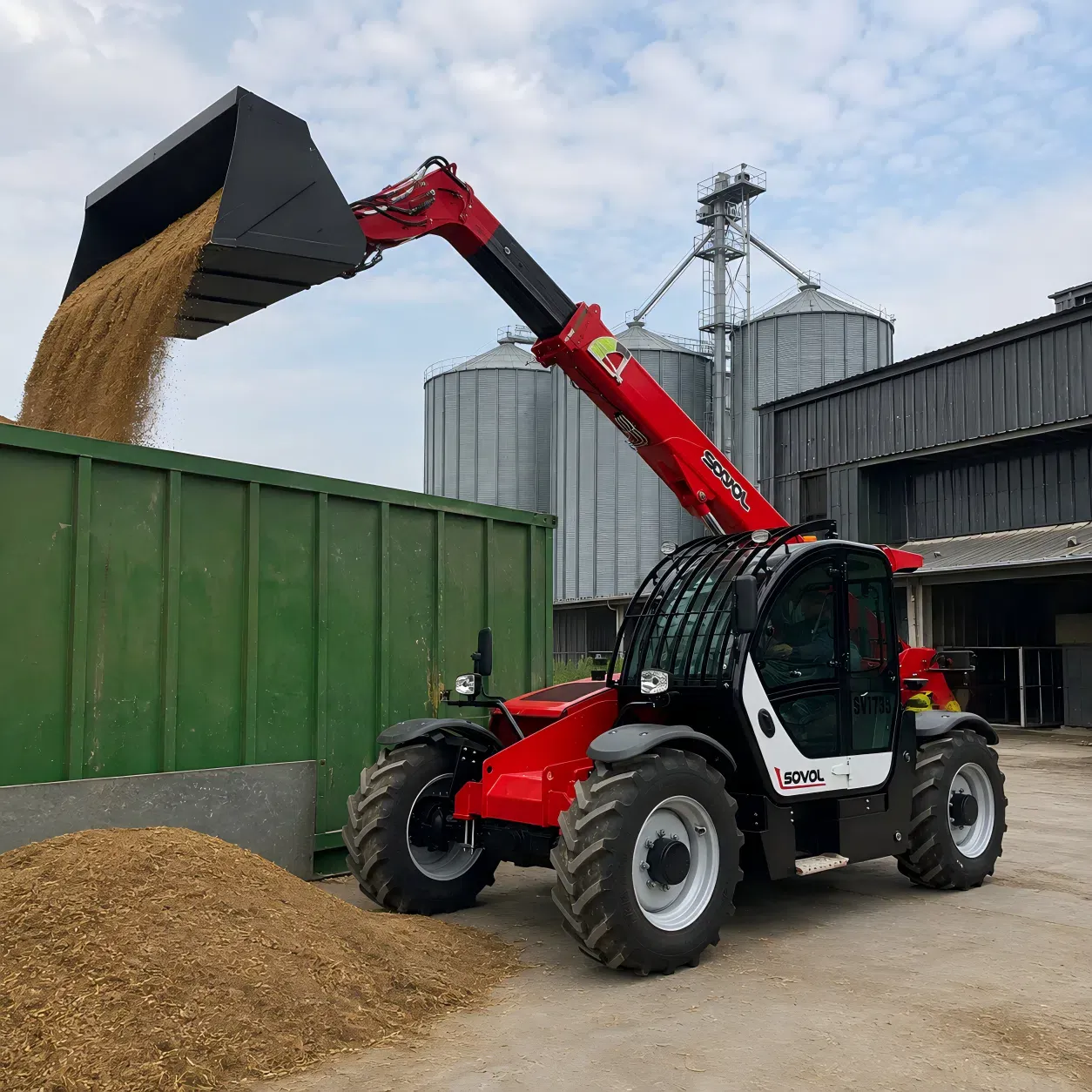
Applications for Hydrostatic Telehandlers
The SW735H is suitable for customers who regularly perform loading and material-handling operations.
| Application | Working Requirement |
| Construction Sites | Controlled positioning when handling building materials |
| Farms | Smooth movement around barns, trailers and storage areas |
| Material Yards | Frequent loading, reversing and pallet handling |
| Equipment Rental | Versatile operation for different customer requirements |
Hydrostatic vs Conventional Telehandler Transmission
Different transmission systems serve different working requirements.
| Feature | Hydrostatic Transmission | Conventional Powershift Transmission |
| Speed Adjustment | Smooth, continuously variable within operating range | Stepped gear ratios |
| Low-Speed Control | Precise travel-speed adjustment | Depends on gearbox and control configuration |
| Gear Changes | No conventional stepped shifting during hydrostatic operation | Gear selection required |
| Typical Advantage | Frequent maneuvering and controlled positioning | Travel and pulling characteristics depend on gearbox design |
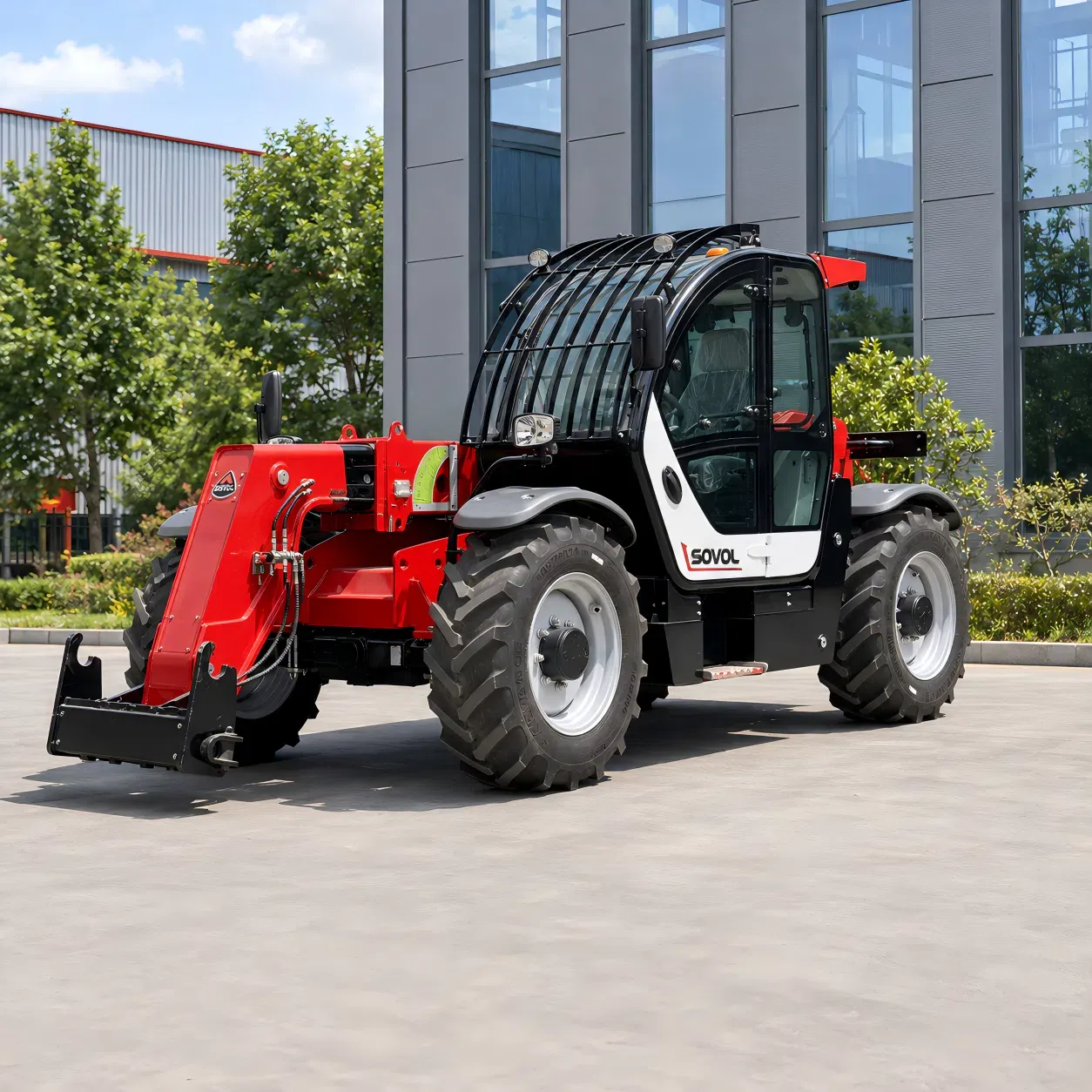
SOVOL SW735H Hydrostatic Telehandler
The SW735H combines the Danfoss hydrostatic drive system with the material-handling capabilities of a 7m-class telehandler.
Its positioning is particularly suitable for customers requiring a higher-specification machine for construction, agriculture and industrial handling.
For customers comparing different transmission configurations, SOVOL also offers the SW735 as an alternative within the same lifting-height class.
The final choice should be based on operating conditions, driving preferences and machine specifications.
Frequently Asked Questions
Q1:What is a hydrostatic telehandler?
A hydrostatic telehandler uses a hydraulic transmission system to control machine travel, allowing smooth speed adjustment and controlled movement.
Q2:What is the advantage of a Danfoss hydrostatic system?
Its key characteristics include smooth speed control and precise low-speed maneuvering, which can be valuable during repetitive material-handling tasks.
Q3:Is a hydrostatic telehandler suitable for construction sites?
Yes. It can be suitable for construction applications that require frequent positioning and controlled movement. The correct machine configuration should also be selected according to terrain and load requirements.
Q4:What is the difference between SW735 and SW735H?
Both belong to SOVOL's 7m telehandler range. The SW735H is positioned as the premium hydrostatic configuration, while the SW735 provides an alternative transmission configuration.