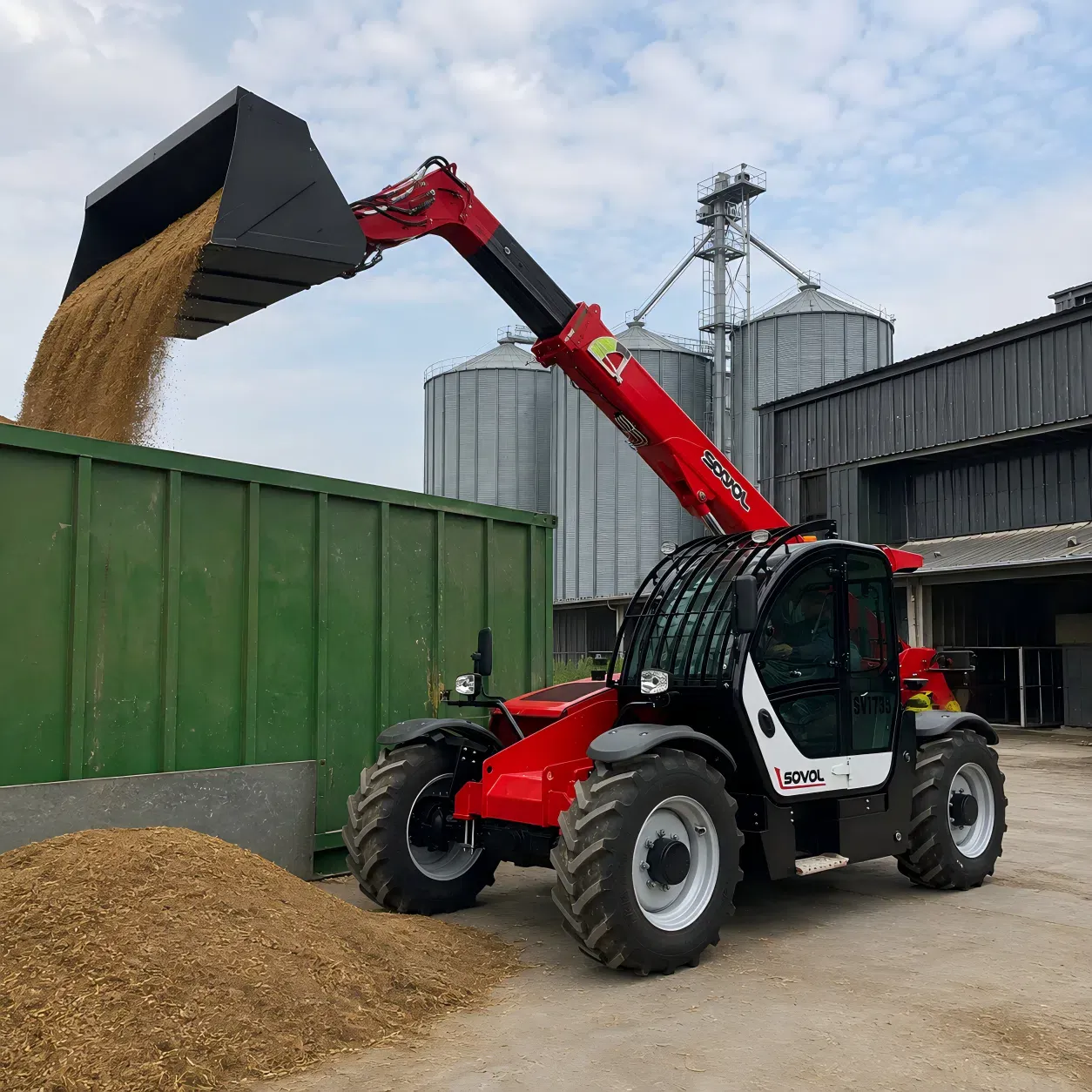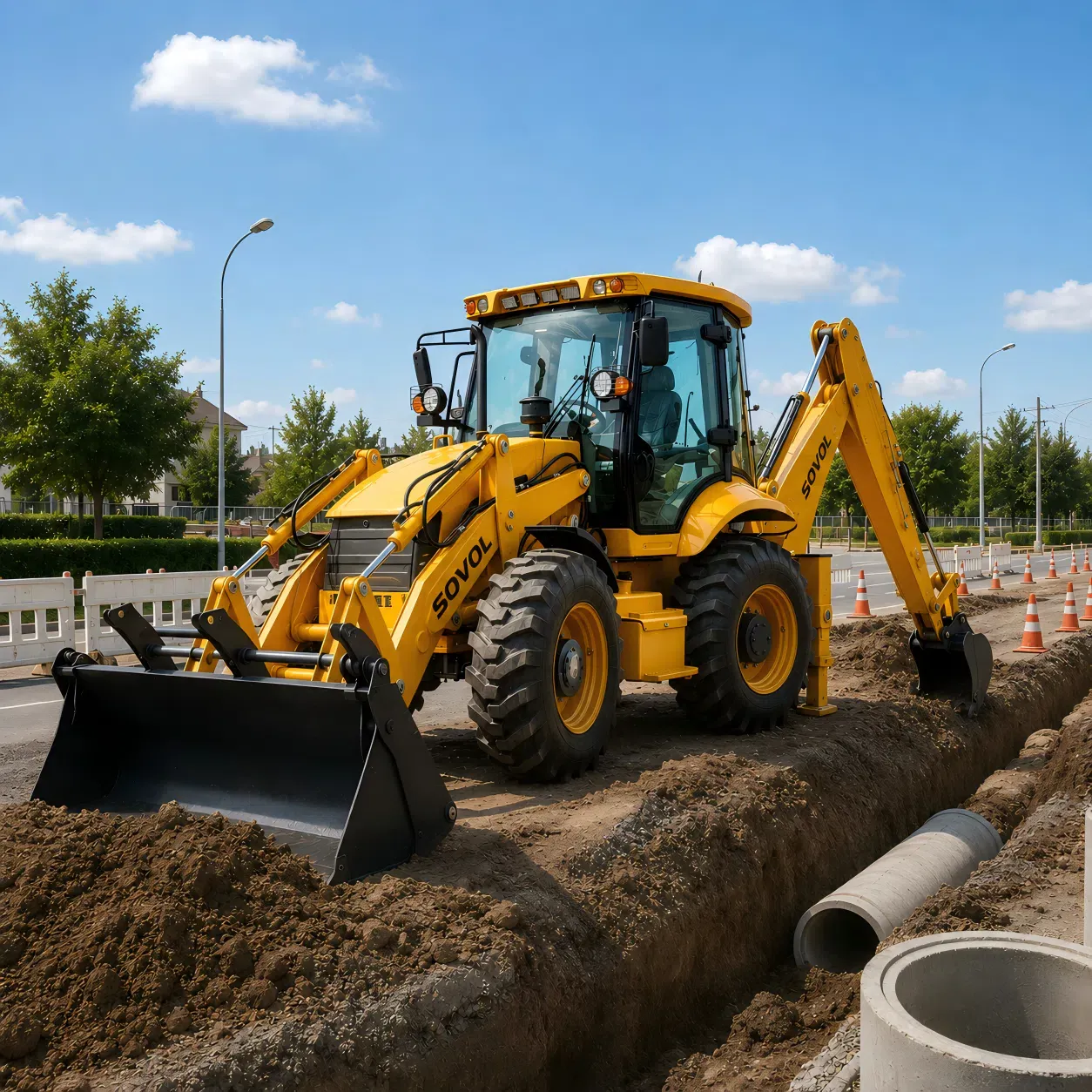
Backhoe Loader Introduction
One Machine for the Complete Utility Work Cycle
Utility installation usually involves a sequence of connected tasks rather than excavation alone.
A typical work cycle may include:
· Removing topsoil or damaged surface material
· Excavating a pipeline or cable trench
· Loading and relocating excavated soil
· Placing sand, gravel or bedding material
· Supporting pipe, conduit or cable installation
· Backfilling the completed trench
· Grading and cleaning the work area
· Moving to the next installation section
The rear excavator performs the primary digging work, while the front loader supports material handling and site restoration.
This two-in-one configuration is particularly valuable where trenching progresses along roads, residential developments, farms, industrial sites or municipal service areas.
Utility Project Applications
Water Pipeline Installation
Drainage and Stormwater Systems
Electrical Cable Trenching
Communication and Fiber-Optic Lines
Gas and Service Pipelines
Utility Repair and Emergency Maintenance
Why Choose a Backhoe Loaders?
Reduced Dependence on Separate Machines
A conventional utility crew may require an excavator for trenching and a loader for material handling and backfilling.
Mobility Along Utility Routes
Pipeline and cable projects often progress along a linear route.
A wheeled backhoe loader can relocate between trench sections and nearby repair locations more easily than many tracked machines.
Practical for Confined Work Areas
Utility installation frequently takes place beside:
· Roads
· Buildings
· Fences
· Existing pipelines
· Residential properties
· Industrial facilities
Suitable for Planned and Emergency Work
The same machine can support new installation, routine maintenance and emergency utility repair.
Featured Models
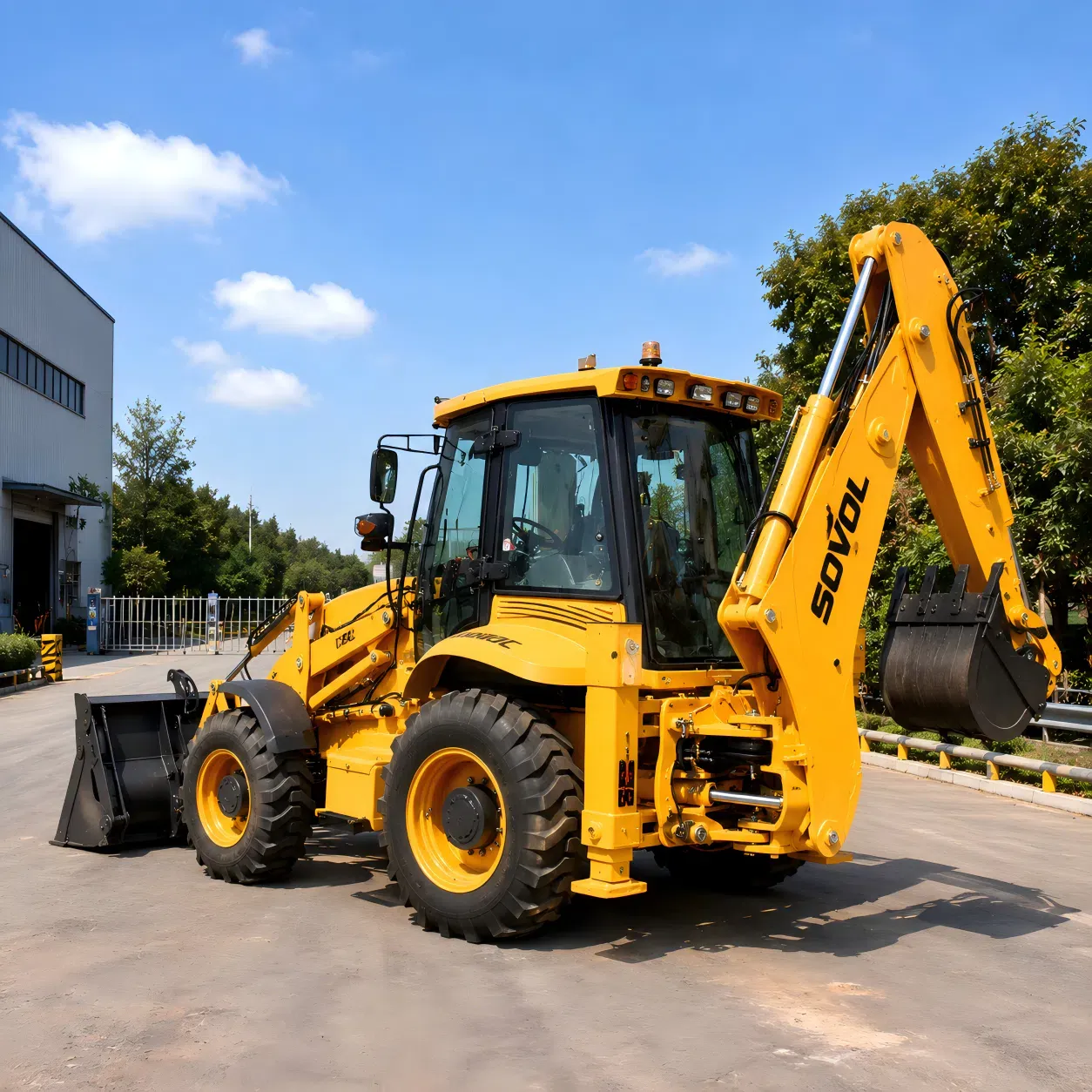
The SOVOL SW388 has an operating weight of 8,200 kg and combines a 1.2 m³ front loader bucket with a 0.3 m³ rear excavator bucket.
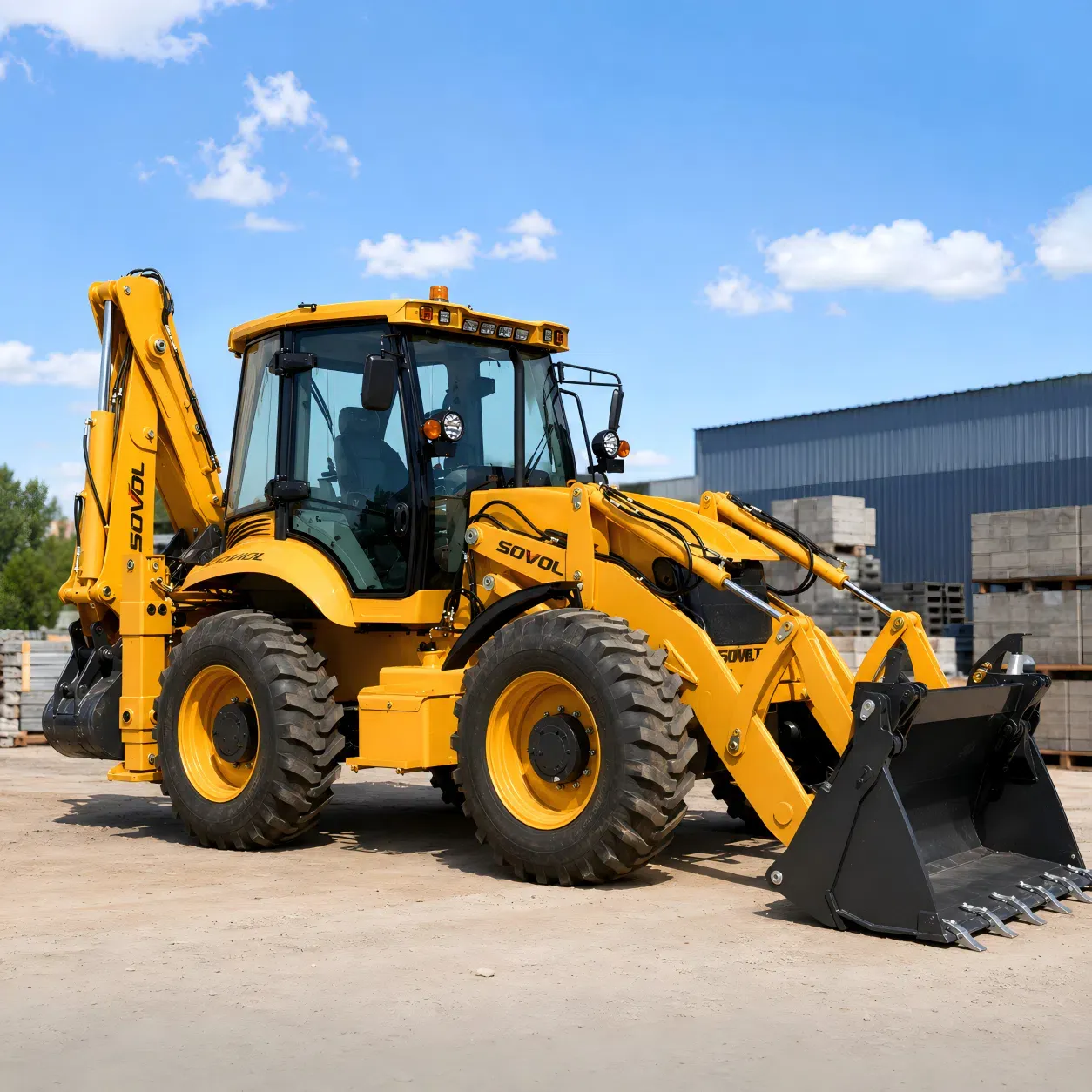
The SOVOL SW388T has an operating weight of approximately 11,000 kg and uses a heavy-duty wet axle with larger 16.9-28 tires.
SW388 or SW388T for Utility Work?
| Selection Factor | SW388 | SW388T |
| Operating weight | 8,200 kg | Approximately 11,000 kg |
| Axle configuration | Heavy-duty dry axle | Heavy-duty wet axle |
| Tire size | 14-17.5 / 19.5L24 | 16.9-28 |
| Front / rear bucket | 1.2 m³ / 0.3 m³ | 1.2 m³ / 0.3 m³ |
| Main advantage | Maneuverability and general versatility | Stability and heavier-duty configuration |
| Recommended projects | Residential, municipal and agricultural utilities | Larger infrastructure and demanding utility work |
| Selection Factor | SW388 | SW388T |
Recommended Attachments for Utility Projects
| Narrow Trenching Bucket | Digging trenches for cables, conduits and smaller pipes. |
| Standard Excavator Bucket | Water pipelines, Drainage work, Repair pits, Wider utility trenches, General excavation |
| 4-in-1 Front Bucket | Loading excavated material, Controlled backfilling, Surface grading, Material grabbing, Work-zone cleanup |
| Hydraulic Hammer | Breaking concrete surfaces, old foundations, compacted ground, pavement sections, small rock areas |
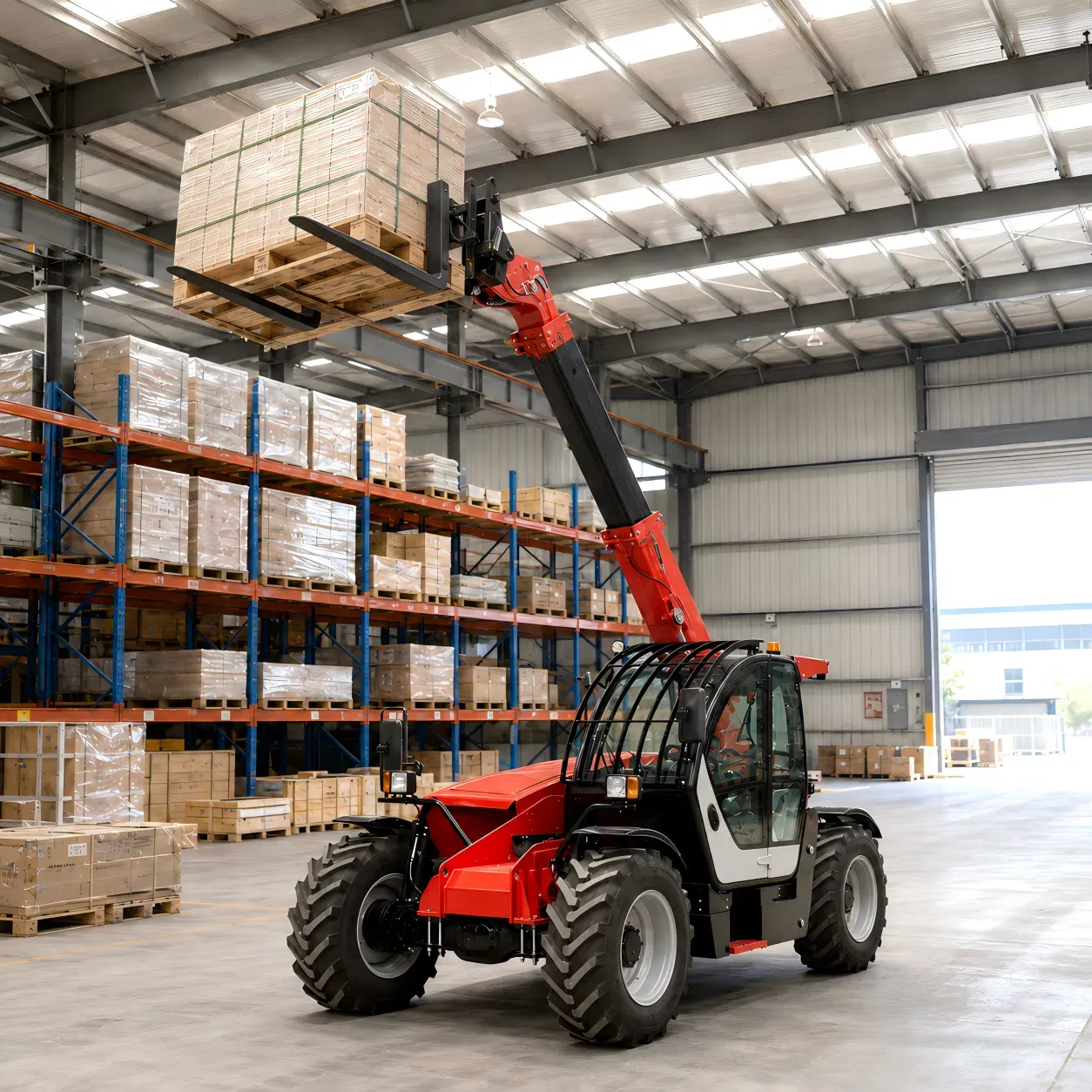
| Pallet Fork | Moving Pipes and fittings, cable drums of suitable size and weight, bagged materials, construction supplies, Palletized components |
| Auger | Supporting the installation of: Utility poles, Lighting poles, Signposts, Small foundations, Service structures |
| Grapple | Assisting with handling: Pipes, Timber supports, Broken materials, Irregular construction debris, Vegetation removed from the utility route |
FAQ
Q1: What utilities can a backhoe loader support?
It can support water pipelines, drainage systems, electrical cables, communication lines, irrigation pipes and other approved underground services.
Q2: Which SOVOL model is suitable for utility work?
The SW388 is suitable for general, municipal and distributed utility projects. The heavier SW388T is better suited to tougher ground and more demanding infrastructure work.
Q3: Can different rear bucket widths be supplied?
Yes. Rear bucket size can be selected according to trench width, pipe dimensions, soil condition and project requirements.
Q4: Can the machine move between different repair sites?
Yes. Its wheeled design and maximum travel speed of 32 km/h support movement around projects and between nearby work zones, subject to local road regulations.