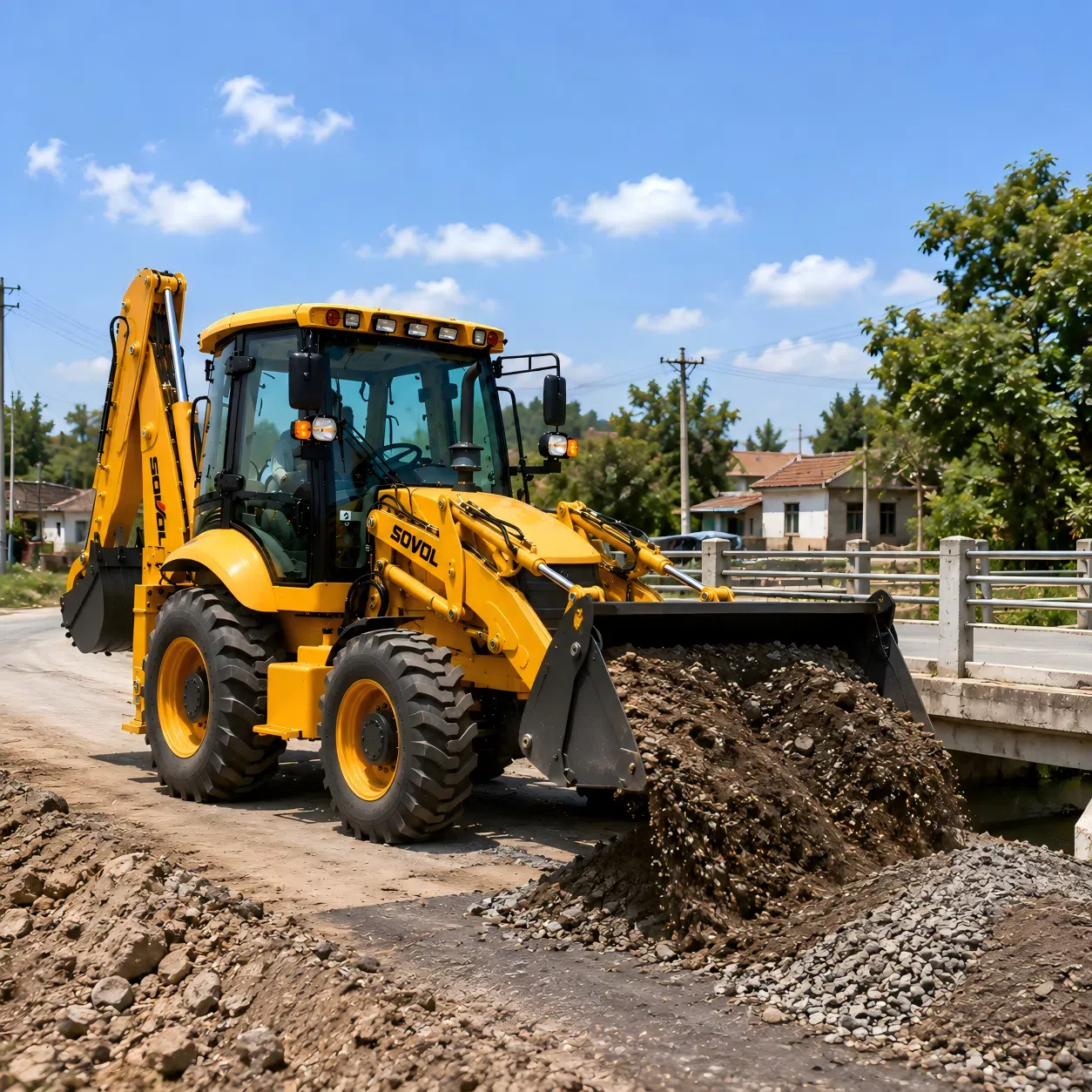
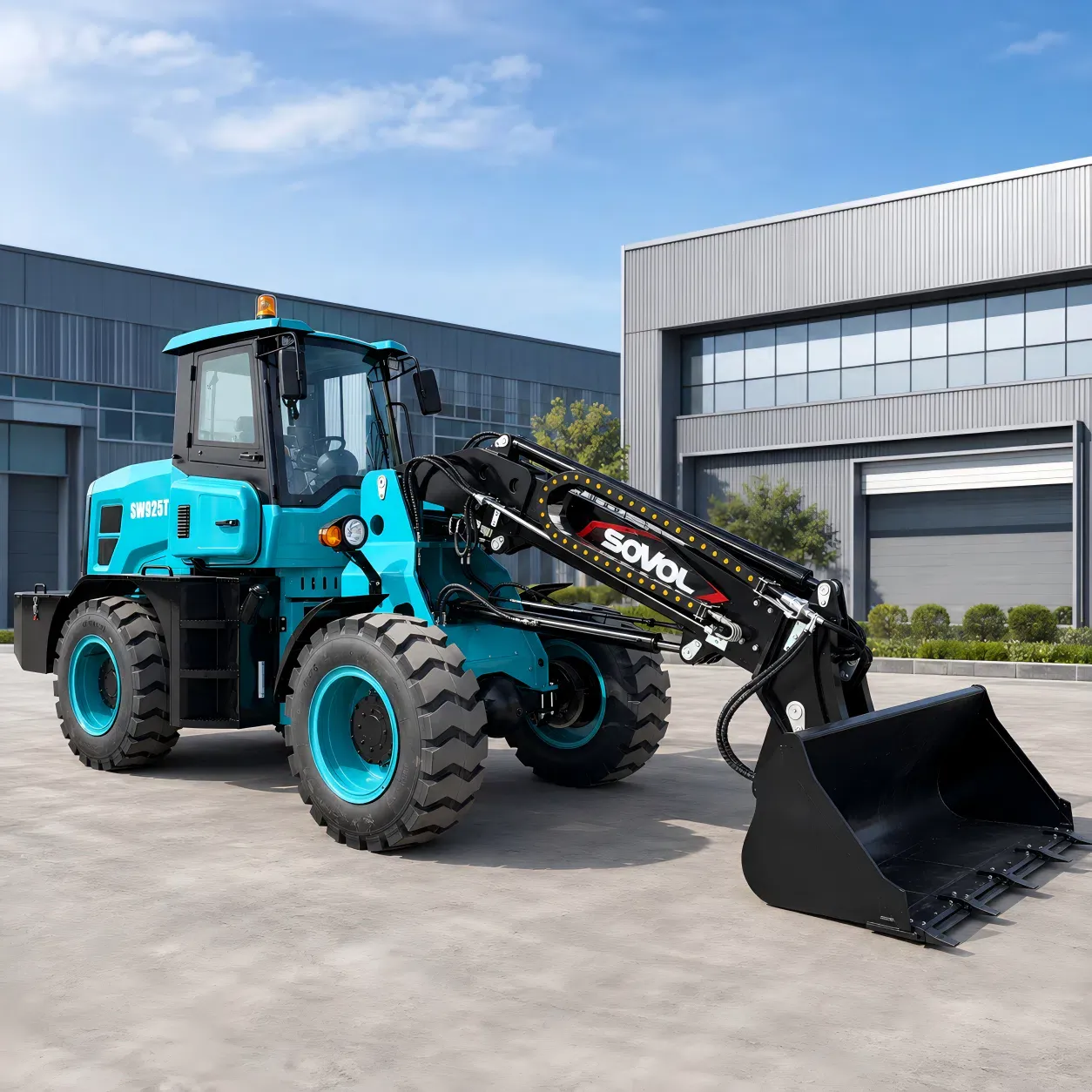
How Does a Telescopic Boom Work?
The main difference between a standard wheel loader and a telescopic boom loader is the boom structure.
A conventional loader uses a fixed lifting arm. Its working range is mainly determined by the geometry of the loader linkage.
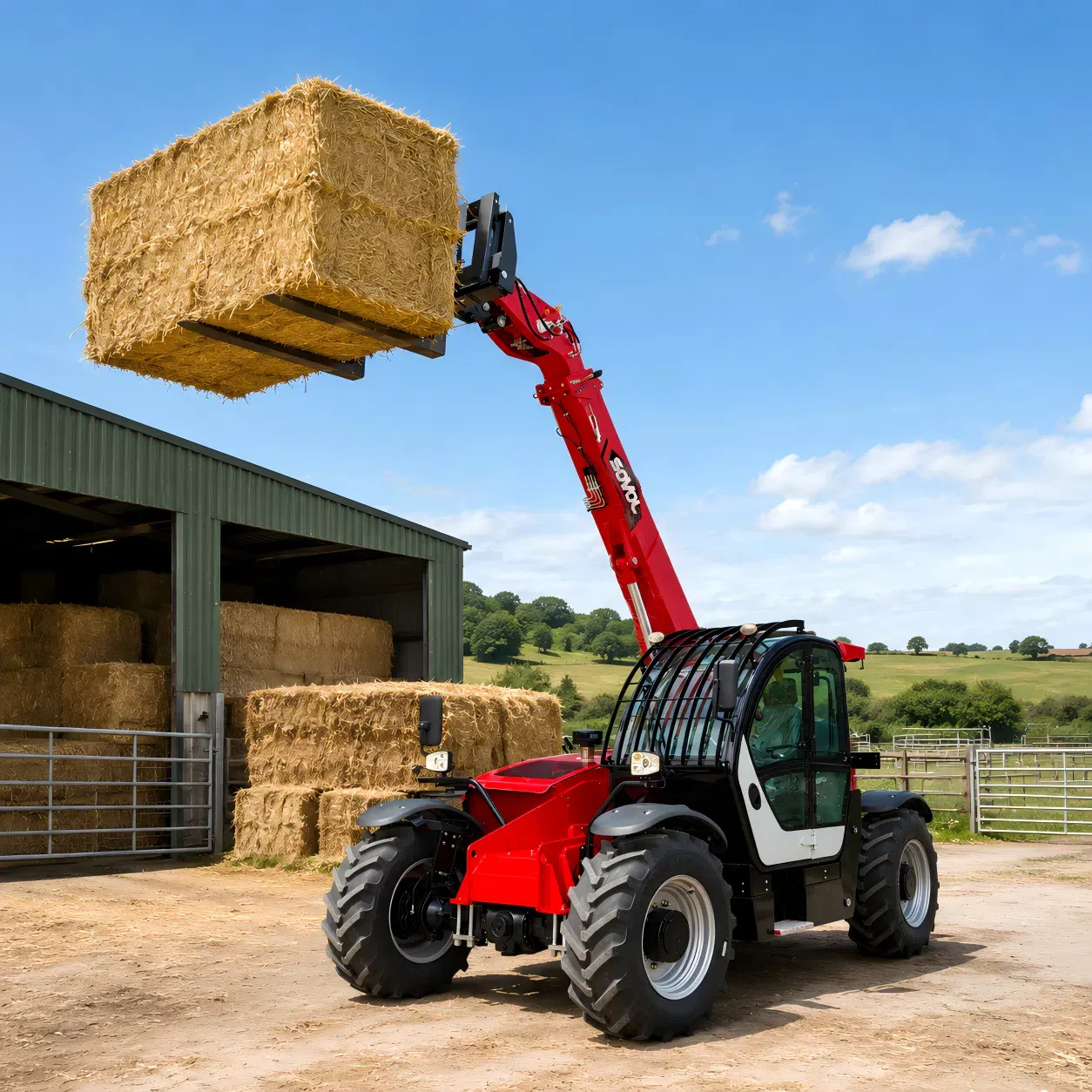
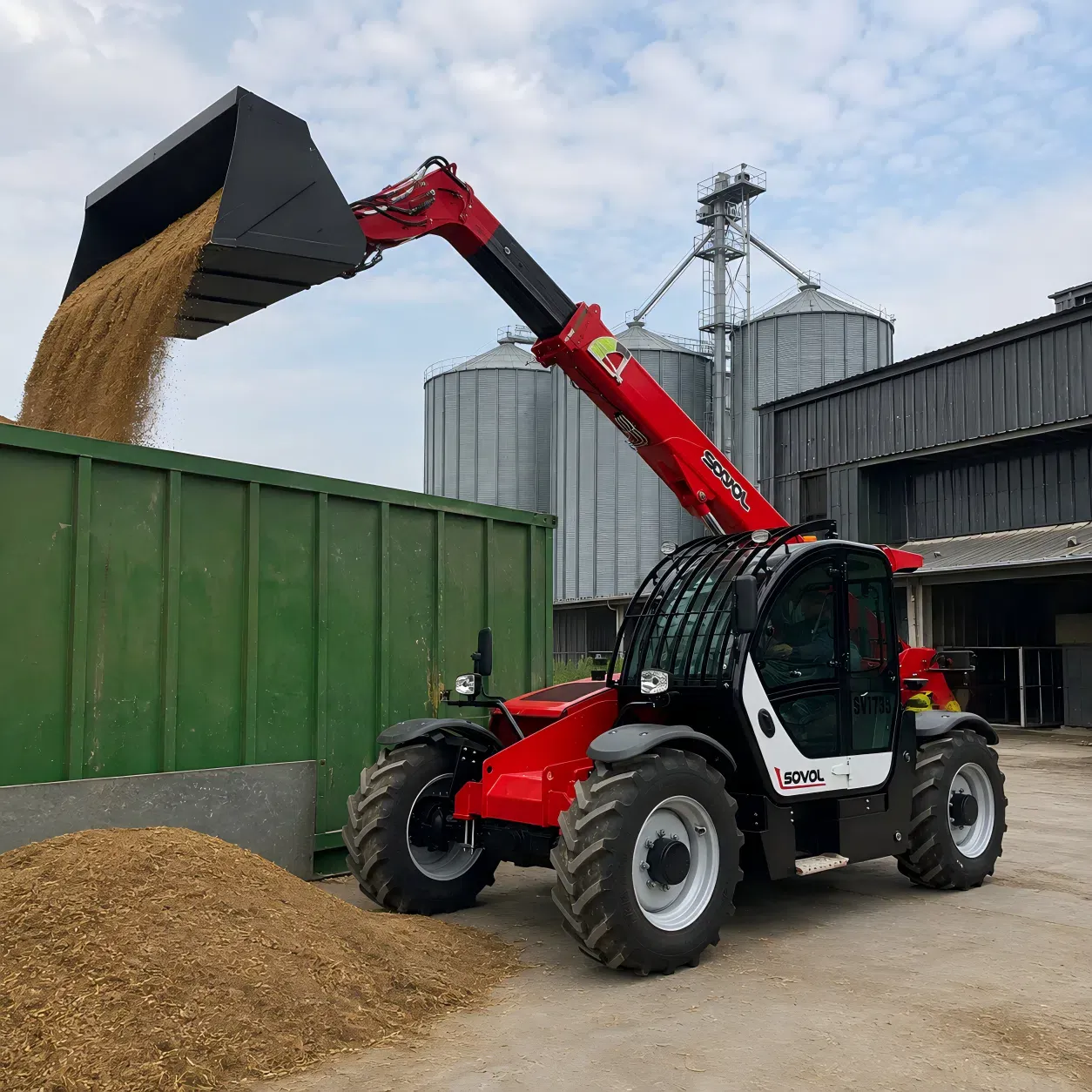
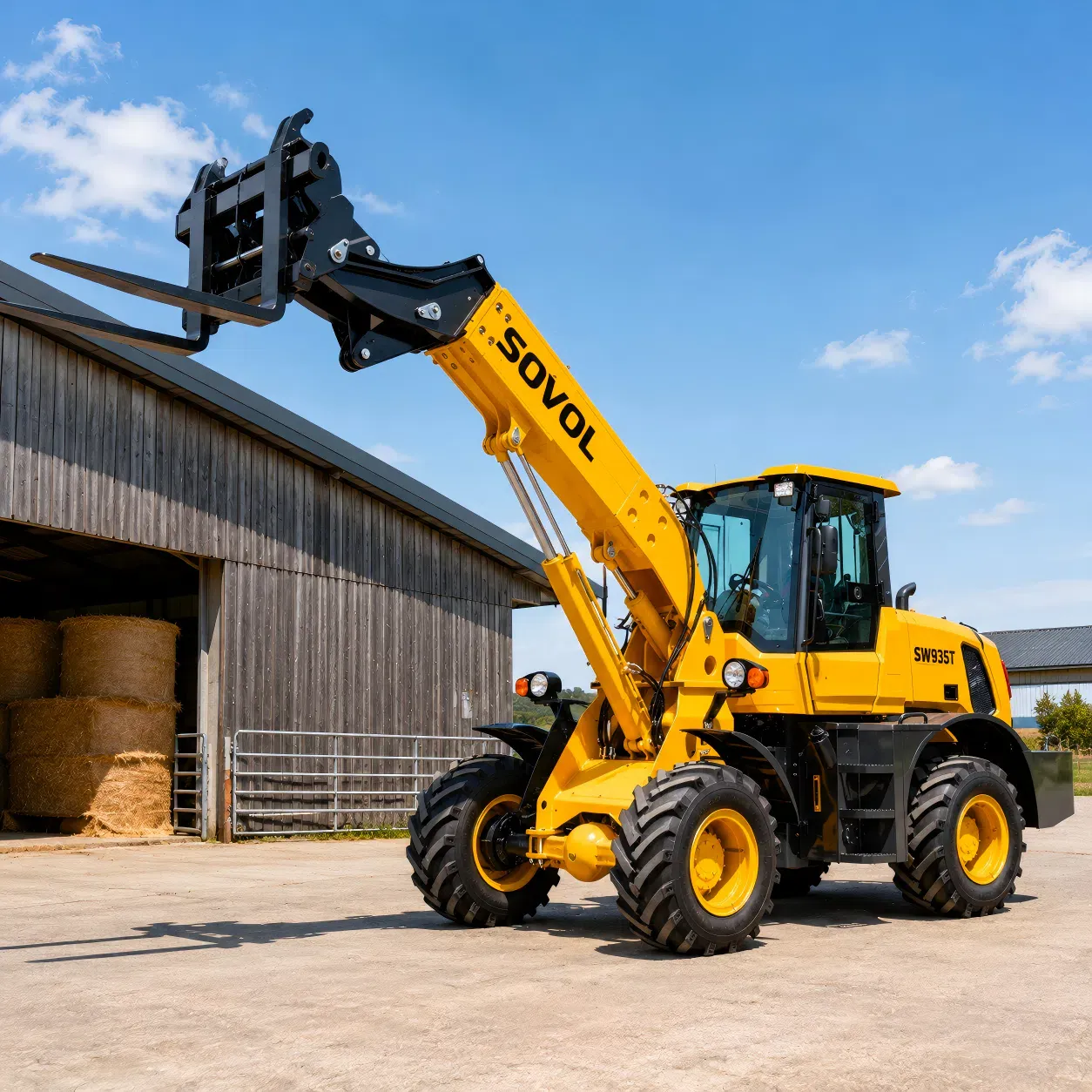
A telescopic boom includes an extendable section that allows the boom to move outward beyond its normal length.
| Telescopic Boom Function | Customer Benefit |
| Vertical extension | Higher lifting and unloading height |
| Forward extension | Greater reach over obstacles or into loading areas |
The operator can therefore complete tasks that would normally require a taller or more specialized machine.
Wheel Loader Performance with Additional Reach
A telescopic boom loader is not simply a smaller telehandler.
It retains many wheel-loader characteristics, including:
· Articulated steering
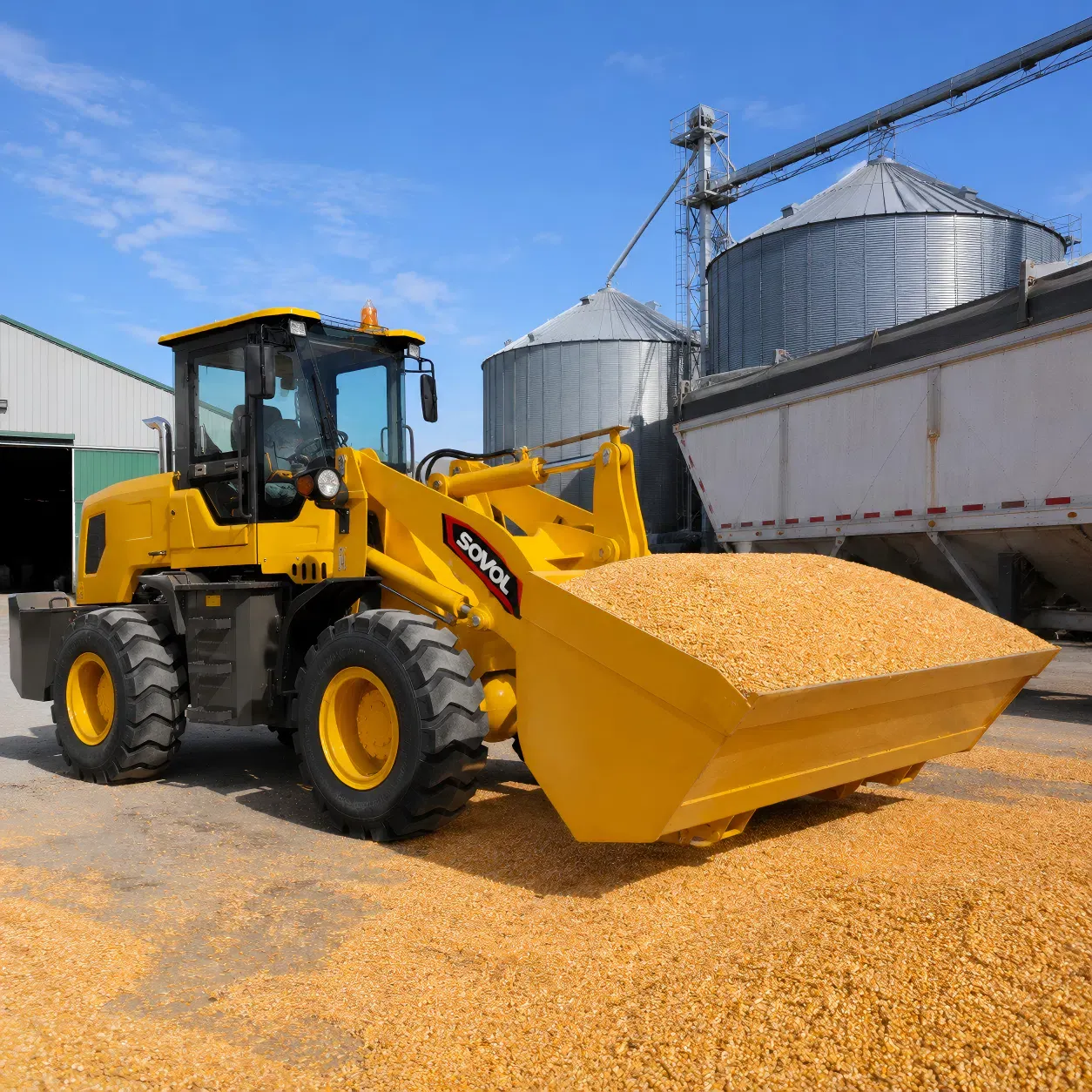
· Strong bucket loading capability
· Four-wheel-drive mobility
· Good maneuverability
· Compatibility with loader attachments
This makes it particularly suitable for customers whose daily work includes both ground-level loading and elevated material handling.
Typical Applications
Agriculture
· Hay bale handling
· Feed loading
· Fertilizer movement
· Farm yard maintenance
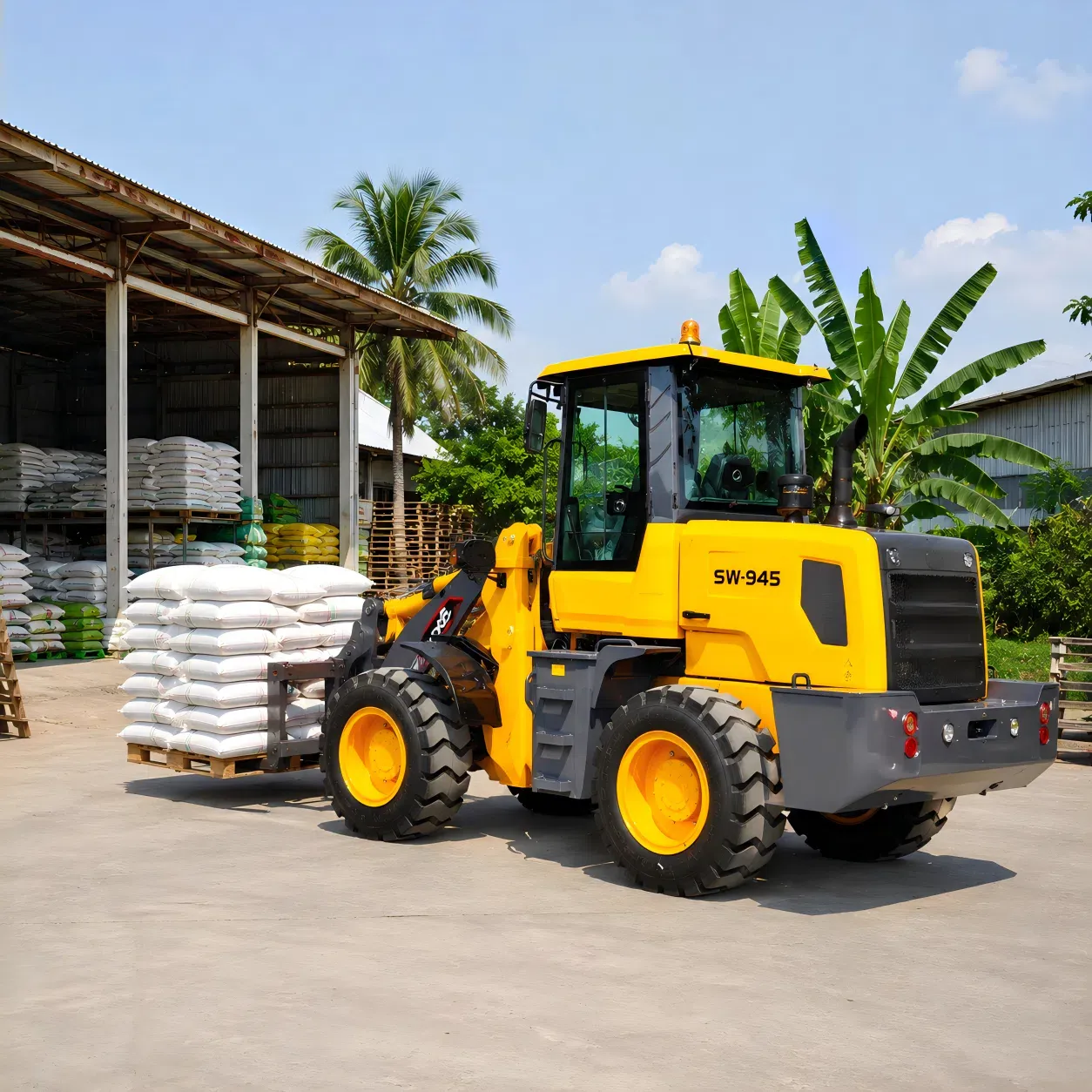
· Pallet handling
The higher boom reach is especially useful around barns, storage areas and high-sided trailers.
Construction
· Loading sand and gravel
· Moving building materials
· Handling pallets
· Loading trucks
· General site support
Compared with standard loaders, the extended boom increases flexibility when working around stored materials and elevated loading points.
Material Yards
Typical operations include:
· Loading trucks
· Moving packaged materials
· Organizing stock
· Handling bulk materials
· Working around storage piles
A telescopic boom loader allows one machine to perform several of these tasks with different attachments.
Telescopic Boom Loader vs Standard Wheel Loader
| Telescopic Boom Loader | Standard Wheel Loader | |
| Boom structure | Extendable | Fixed |
| Lifting height | Higher | Standard |
| Forward reach | Greater | Limited |
| Bucket loading | Excellent | Excellent |
| Pallet handling | More flexible | Limited by reach |
| Application range | Wider | General loading |
Telescopic Boom Loader vs Telehandler
| Telescopic Boom Loader | Telehandler | |
| Main strength | Loading + reach | High-reach lifting |
| Bucket loading | Strong | Less loader-focused |
| Articulated steering | Common | Usually different steering layout |
| Bulk material handling | Excellent | More limited |
| High lifting | Good | Excellent |
SOVOL Telescopic Boom Loader Range
SOVOL offers telescopic wheel loaders in several capacity classes to suit different applications.
Typical choices include:
· SW915T – compact and flexible applications
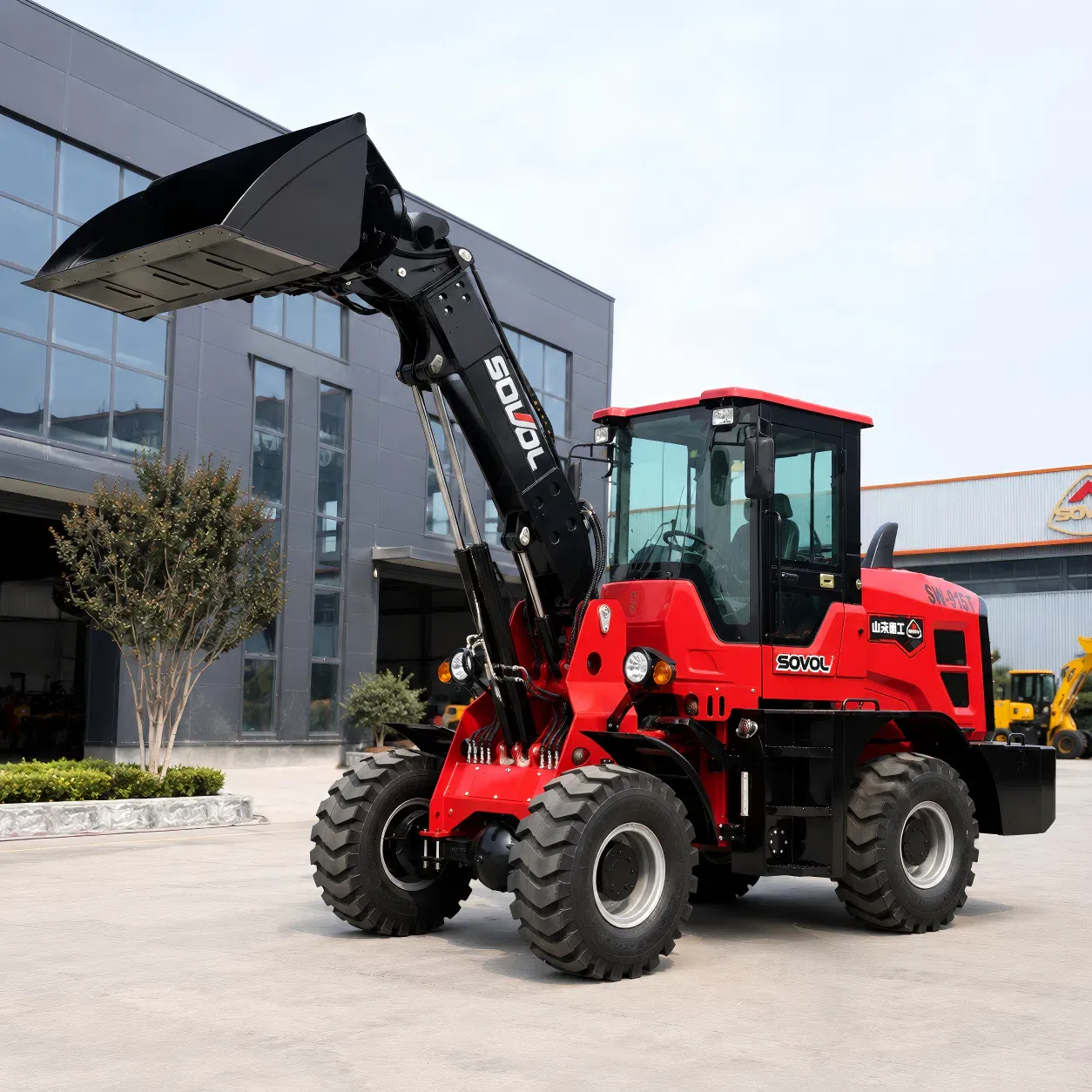
· SW925T – balanced general-purpose material handling
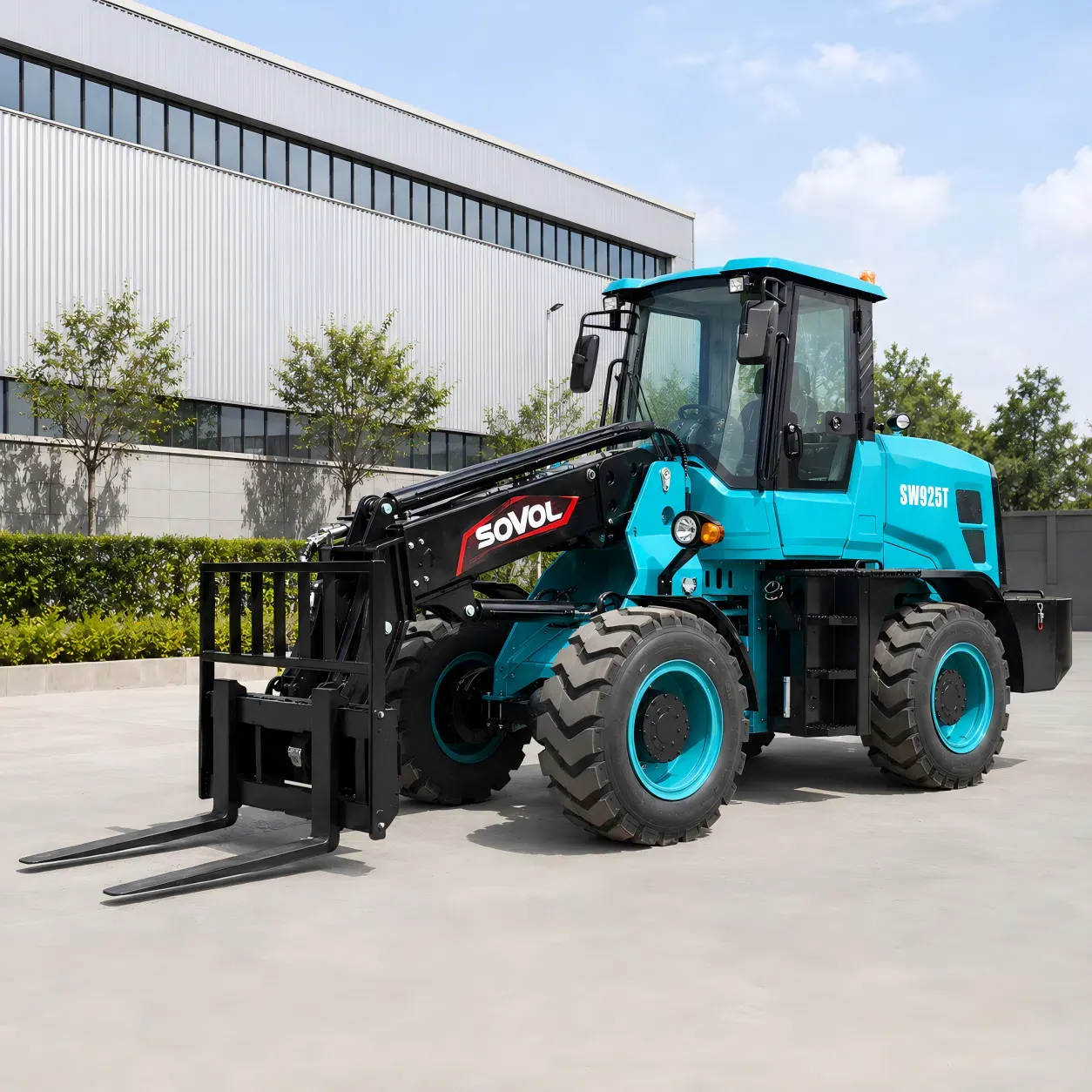
· SW935T – higher-capacity and heavier applications
FAQ
Q1:What is a telescopic boom loader?
A telescopic boom loader is a wheel-loader-type machine equipped with an extendable boom that provides additional lifting height and forward reach.
Q2:What is the advantage of a telescopic boom?
The main advantage is a larger working range, allowing the loader to reach higher and farther than a conventional fixed-boom loader.
Q3:Is a telescopic boom loader the same as a telehandler?
No. Although both use telescopic booms, a telescopic boom loader retains more wheel-loader characteristics and is often better suited to bucket loading and general material handling.
Q4:What applications are suitable for telescopic boom loaders?
They are suitable for farms, construction sites, material yards, warehouses, landscaping and other mixed loading and lifting applications.
Q5:Can different attachments be used?
Yes. Depending on the model and hydraulic configuration, telescopic boom loaders can work with forks, buckets, grapples and other attachments.